Definition
Wind is invisible, yet we can feel its power, movement, and beauty. It can represent freedom, change, speed, strength, peace, or even mystery. Instead of simply saying “the wind blew,” writers use metaphors for wind to create vivid images and stronger emotions.
A metaphor compares one thing directly to another without using “like” or “as.” For example, you might say, “The wind is a messenger.” The wind is not actually a messenger, but the comparison helps readers imagine it carrying news, whispers, or change.
In simple terms, metaphors make writing more colorful and memorable. They are useful in poems, stories, speeches, and essays. Unlike simile sentences, metaphors create direct comparisons that make descriptions more expressive. Let’s explore 20 examples of metaphors for wind and learn how to use metaphors in writing.
20 Metaphors for Wind
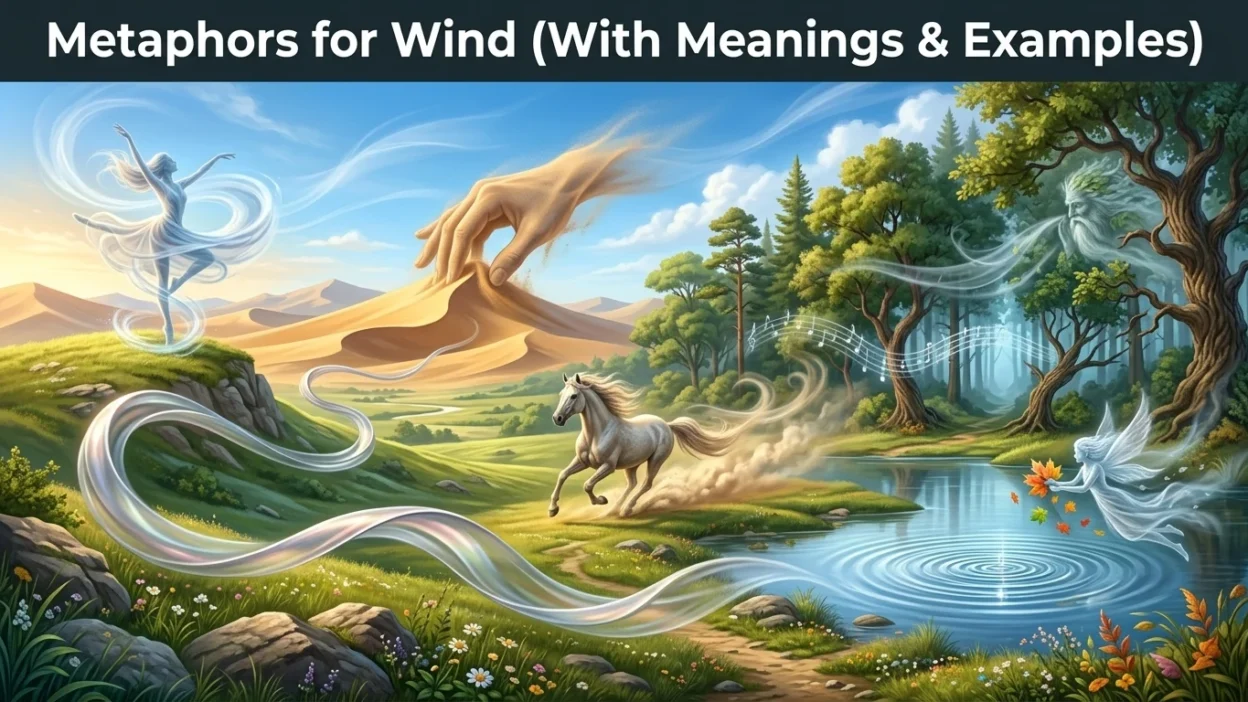
1. The wind is a messenger.
Meaning: The wind carries change or news.
Explanation: A messenger delivers important information.
Example 1: The wind was a messenger of spring.
Example 2: A cool breeze carried nature’s message.
2. The wind is a dancer.
Meaning: The wind moves gracefully.
Explanation: It sways through trees like a dancer.
Example 1: The wind danced across the field.
Example 2: Leaves joined the dancer’s performance.
3. The wind is a whisper.
Meaning: The wind is soft and gentle.
Explanation: A whisper is quiet and calming.
Example 1: The wind became a gentle whisper.
Example 2: I listened to its quiet voice.
4. The wind is a painter.
Meaning: The wind changes the landscape.
Explanation: It moves leaves, clouds, and sand.
Example 1: The wind painted waves across the grass.
Example 2: Autumn leaves became its colors.
5. The wind is a traveler.
Meaning: The wind moves everywhere.
Explanation: Travelers journey from place to place.
Example 1: The wind was a tireless traveler.
Example 2: It visited every corner of the valley.
6. The wind is a musician.
Meaning: The wind creates natural sounds.
Explanation: It plays through trees and buildings.
Example 1: The wind became a woodland musician.
Example 2: Every branch joined the song.
7. The wind is a wild horse.
Meaning: The wind is powerful and free.
Explanation: A wild horse symbolizes energy.
Example 1: The wind raced like a wild spirit.
Example 2: Nothing could stop its run.
8. The wind is a storyteller.
Meaning: The wind seems to share old tales.
Explanation: Its sounds inspire imagination.
Example 1: The wind became an ancient storyteller.
Example 2: Every gust told a new story.
9. The wind is an artist.
Meaning: The wind shapes nature beautifully.
Explanation: It creates patterns in water and sand.
Example 1: The wind was an artist.
Example 2: Sand became its canvas.
10. The wind is a river.
Meaning: The wind flows continuously.
Explanation: Both wind and rivers keep moving.
Example 1: A river of wind crossed the valley.
Example 2: The invisible river never stopped.
11. The wind is a drumbeat.
Meaning: The wind has a steady rhythm.
Explanation: Strong gusts sound repetitive.
Example 1: The storm brought a drumbeat of wind.
Example 2: The rhythm echoed through the trees.
12. The wind is a giant.
Meaning: The wind has great power.
Explanation: Giants symbolize strength.
Example 1: The giant pushed against the trees.
Example 2: Nothing challenged its force.
13. The wind is a key.
Meaning: The wind opens new seasons or changes.
Explanation: A key unlocks new beginnings.
Example 1: Spring arrived with the wind’s key.
Example 2: Change opened quietly.
14. The wind is a bridge.
Meaning: The wind connects distant places.
Explanation: It carries scents and sounds.
Example 1: The wind became a bridge between forests.
Example 2: It carried birdsong across the valley.
15. The wind is an invisible sculptor.
Meaning: The wind shapes the world.
Explanation: It carves rocks, snow, and sand.
Example 1: The sculptor shaped the dunes.
Example 2: Nature displayed its artwork.
16. The wind is a restless child.
Meaning: The wind is playful and energetic.
Explanation: Children move with endless energy.
Example 1: The wind was a restless child.
Example 2: It chased leaves across the yard.
17. The wind is a silver ribbon.
Meaning: The wind moves smoothly.
Explanation: A ribbon flows gracefully.
Example 1: A silver ribbon floated through the valley.
Example 2: The ribbon curled around the trees.
18. The wind is a silent teacher.
Meaning: Nature quietly teaches valuable lessons.
Explanation: The wind reminds us about change and patience.
Example 1: The wind became a silent teacher.
Example 2: It taught without speaking.
19. The wind is a heartbeat.
Meaning: The wind gives life to nature.
Explanation: A heartbeat symbolizes life.
Example 1: The forest breathed with the wind’s heartbeat.
Example 2: Every leaf moved with its rhythm.
20. The wind is freedom.
Meaning: The wind represents independence and movement.
Explanation: Wind travels without limits.
Example 1: The wind was freedom itself.
Example 2: Birds followed freedom across the sky.
Practical Exercise
- What is a metaphor?
- Complete: The wind is a ________.
- Which metaphor represents change?
- Which metaphor suggests graceful movement?
- What does “The wind is a messenger” mean?
- Which metaphor represents great strength?
- Which metaphor symbolizes creativity?
- What does “The wind is freedom” suggest?
- Write your own metaphor for wind.
- Why do writers use metaphors for wind?
Answers
- A direct comparison without using “like” or “as.”
- Messenger (or any suitable metaphor).
- The wind is a messenger or a key.
- The wind is a dancer or a silver ribbon.
- The wind brings change or carries messages.
- The wind is a giant.
- The wind is an artist or an invisible sculptor.
- Wind represents independence, movement, and limitless possibilities.
- Answers will vary.
- Metaphors make descriptions more vivid, emotional, and memorable.
Conclusion
Metaphors for wind help writers describe movement, change, freedom, and nature in creative ways. Instead of simply saying the wind is blowing, you can describe it as a messenger, a dancer, a storyteller, an invisible sculptor, or freedom itself. These examples of metaphors make stories, poems, and essays more engaging and expressive. Try creating your own metaphors by thinking about how the wind looks, sounds, or feels. With practice, your creative writing will become richer, more imaginative, and easier for readers to remember.