Definition
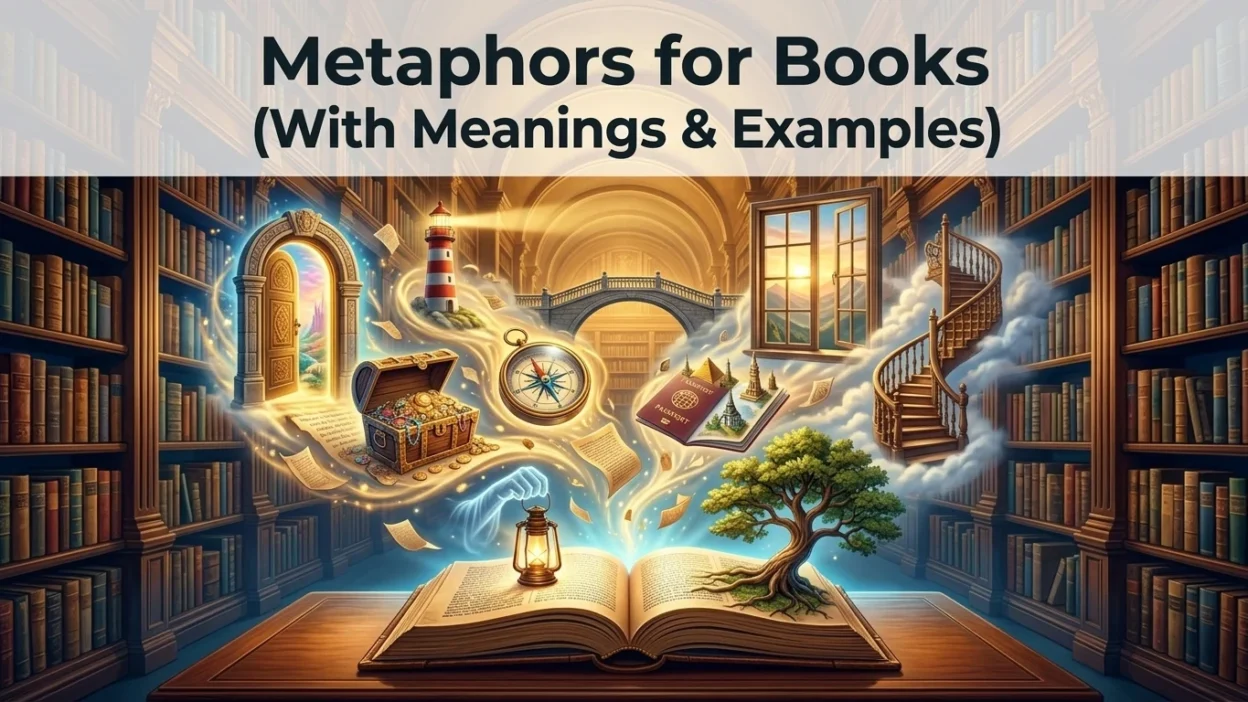
Books are much more than printed pages. They can teach, inspire, entertain, and take us to places we’ve never been. Instead of simply saying “books are important,” writers use metaphors for books to explain their value in a more creative and memorable way.
A metaphor compares one thing directly to another without using “like” or “as.” For example, you might say, “A book is a doorway to another world.” A book is not a real doorway, but the comparison helps readers imagine how stories open new adventures.
In simple terms, metaphors make writing more vivid and engaging. They help readers connect ideas with strong mental images. Unlike simile sentences, metaphors create direct comparisons. Let’s explore 20 examples of metaphors for books and learn how to use metaphors in writing.
20 Metaphors for Books
1. A book is a doorway.
Meaning: Books open new worlds and ideas.
Explanation: A doorway leads somewhere new.
Example 1: Every novel was a doorway to adventure.
Example 2: She stepped through the doorway with every page.
2. A book is a treasure chest.
Meaning: Books hold valuable knowledge.
Explanation: Treasure chests contain precious things.
Example 1: The library was full of treasure chests.
Example 2: Each chapter revealed another treasure.
3. A book is a window.
Meaning: Books help us see different perspectives.
Explanation: Windows let us look beyond our surroundings.
Example 1: History books became windows to the past.
Example 2: The novel opened a new window on life.
4. A book is a bridge.
Meaning: Books connect people and ideas.
Explanation: Bridges bring places together.
Example 1: Reading became a bridge between cultures.
Example 2: Books built bridges across generations.
5. A book is a key.
Meaning: Books unlock knowledge.
Explanation: Keys open locked doors.
Example 1: Education gave me the key.
Example 2: Every book unlocked new ideas.
6. A book is a teacher.
Meaning: Books help us learn.
Explanation: They share knowledge and wisdom.
Example 1: This novel became my teacher.
Example 2: Books teach lessons beyond the classroom.
7. A book is a lighthouse.
Meaning: Books offer guidance.
Explanation: Lighthouses help people find their way.
Example 1: The biography became my lighthouse.
Example 2: Books guided me through difficult times.
8. A book is a time machine.
Meaning: Books take readers to different times.
Explanation: Stories can revisit history or imagine the future.
Example 1: The history book became a time machine.
Example 2: Every chapter traveled through time.
9. A book is a friend.
Meaning: Books provide comfort and companionship.
Explanation: A good book is always there for you.
Example 1: That novel became my closest friend.
Example 2: I returned to my old friend every weekend.
10. A book is a garden.
Meaning: Books are full of ideas waiting to grow.
Explanation: Gardens represent growth and beauty.
Example 1: Every page bloomed with ideas.
Example 2: Reading planted new thoughts.
11. A book is a map.
Meaning: Books guide readers through life or learning.
Explanation: Maps help people find direction.
Example 1: The guidebook became my map.
Example 2: Books showed me the right path.
12. A book is a mirror.
Meaning: Books reflect our lives and emotions.
Explanation: Readers often see themselves in stories.
Example 1: The novel became a mirror.
Example 2: I found myself in its pages.
13. A book is a seed.
Meaning: Books plant new ideas.
Explanation: Small ideas can grow into something big.
Example 1: The story planted a seed of hope.
Example 2: Reading grew into a lifelong habit.
14. A book is a compass.
Meaning: Books help us make better decisions.
Explanation: A compass provides direction.
Example 1: That book became my compass.
Example 2: Its lessons pointed the right way.
15. A book is a lantern.
Meaning: Books bring understanding.
Explanation: Lanterns provide light in darkness.
Example 1: Reading lit my path.
Example 2: The lantern brightened confusing moments.
16. A book is a passport.
Meaning: Books let us explore different places.
Explanation: Stories take readers around the world.
Example 1: The novel became my passport.
Example 2: Every chapter visited a new country.
17. A book is a conversation.
Meaning: Books allow ideas to be shared.
Explanation: Reading feels like listening to the author.
Example 1: Every page was a conversation.
Example 2: The author spoke through the story.
18. A book is an adventure.
Meaning: Reading is an exciting journey.
Explanation: Stories are filled with discoveries.
Example 1: The fantasy novel became an adventure.
Example 2: Every page brought a surprise.
19. A book is a staircase.
Meaning: Books help readers grow.
Explanation: Stairs take us to higher places.
Example 1: Reading became a staircase to success.
Example 2: Every chapter lifted my understanding.
20. A book is a heartbeat.
Meaning: Books keep stories and ideas alive.
Explanation: A heartbeat represents life.
Example 1: Literature is the heartbeat of culture.
Example 2: Great books keep history alive.
Practical Exercise
- What is a metaphor?
- Complete: A book is a ________ to another world.
- Which metaphor represents guidance?
- Which metaphor symbolizes learning?
- What does “A book is a treasure chest” mean?
- Which metaphor compares books to travel?
- Which metaphor represents personal growth?
- What does “A book is a mirror” suggest?
- Write your own metaphor for books.
- Why do writers use metaphors for books?
Answers
- A direct comparison without using “like” or “as.”
- Doorway.
- A book is a lighthouse or a compass.
- A book is a teacher.
- Books contain valuable knowledge and ideas.
- A book is a passport.
- A book is a staircase or a seed.
- Books help readers see themselves and their emotions.
- Answers will vary.
- Metaphors make descriptions more vivid, meaningful, and memorable.
Conclusion
Metaphors for books help writers describe the power of reading in creative ways. Instead of simply saying books are useful, you can call them doorways, treasure chests, lighthouses, passports, or mirrors. These examples of metaphors make writing richer and easier to imagine. Try creating your own metaphors by thinking about how books have influenced your life. With practice, your creative writing will become more expressive, engaging, and memorable.

Gabriel Hudson is a skilled language writer and figurative language enthusiast at Metaphorox.com. He specializes in metaphors, similes, and idioms, creating engaging content that helps readers understand creative expressions and communicate more effectively.