Definition
Business can be exciting, challenging, competitive, and rewarding. Sometimes the word “business” alone cannot explain the hard work, teamwork, risks, and growth involved. That is why writers often use metaphors for business to make ideas easier to understand and more memorable.
A metaphor compares one thing directly to another without using “like” or “as.” For example, you might say, “Business is a marathon.” Business is not really a race, but the comparison helps readers understand that success takes time, effort, and endurance.
In simple terms, metaphors make writing more vivid and engaging. They are common in speeches, marketing, leadership books, and creative writing. Unlike simile sentences, metaphors create direct comparisons that give readers stronger images. Let’s explore 20 examples of metaphors for business and learn how to use metaphors in writing.
20 Metaphors for Business
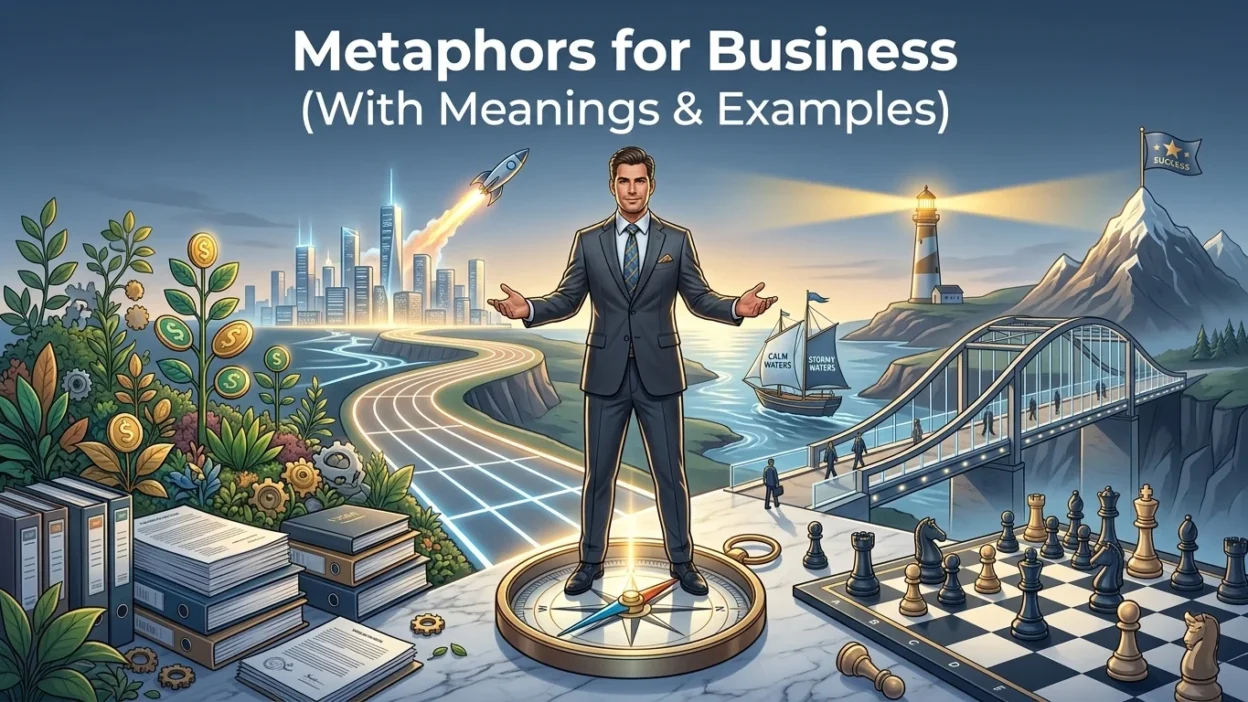
1. Business is a marathon.
Meaning: Success takes time and persistence.
Explanation: Marathons reward endurance, not speed.
Example 1: Building the company was a marathon.
Example 2: We focused on long-term progress.
2. Business is a garden.
Meaning: It needs care and patience to grow.
Explanation: Gardens flourish with attention.
Example 1: Their business became a thriving garden.
Example 2: Daily effort helped it grow.
3. Business is a ship.
Meaning: Leadership guides the company.
Explanation: Ships need direction to reach their destination.
Example 1: She steered the ship through difficult times.
Example 2: The captain kept everyone focused.
4. Business is a puzzle.
Meaning: Many pieces must fit together.
Explanation: Success requires solving different challenges.
Example 1: Running the company was a puzzle.
Example 2: Every department was an important piece.
5. Business is a ladder.
Meaning: Growth happens step by step.
Explanation: Success often comes gradually.
Example 1: He climbed the business ladder.
Example 2: Each achievement became another step.
6. Business is a battlefield.
Meaning: Competition can be intense.
Explanation: Companies compete for customers and opportunities.
Example 1: The market became a battlefield.
Example 2: Strategy helped us succeed.
7. Business is a journey.
Meaning: Progress happens over time.
Explanation: Every business has different stages.
Example 1: Entrepreneurship is a long journey.
Example 2: We learned something at every stop.
8. Business is a machine.
Meaning: Every part must work together.
Explanation: Teams and systems depend on cooperation.
Example 1: The company operated like a machine.
Example 2: Every employee mattered.
9. Business is a bridge.
Meaning: It connects people and opportunities.
Explanation: Businesses create relationships and value.
Example 1: Our company became a bridge between communities.
Example 2: Trust built the bridge.
10. Business is a chess game.
Meaning: Smart planning is important.
Explanation: Decisions affect future outcomes.
Example 1: Business felt like a chess game.
Example 2: Every move required strategy.
11. Business is a tree.
Meaning: Strong roots create lasting growth.
Explanation: Values and planning support success.
Example 1: Their company grew into a strong tree.
Example 2: Good leadership strengthened the roots.
12. Business is a race track.
Meaning: Competition encourages speed and improvement.
Explanation: Companies constantly move forward.
Example 1: The industry became a race track.
Example 2: Innovation kept us ahead.
13. Business is a lighthouse.
Meaning: Vision guides success.
Explanation: A lighthouse provides direction.
Example 1: Our mission became a lighthouse.
Example 2: It guided every decision.
14. Business is a mountain.
Meaning: Success requires effort and determination.
Explanation: Reaching the top takes hard work.
Example 1: Building the company was a mountain to climb.
Example 2: Every challenge brought us higher.
15. Business is a classroom.
Meaning: There is always something to learn.
Explanation: Experience teaches valuable lessons.
Example 1: Entrepreneurship became my classroom.
Example 2: Every mistake taught me something.
16. Business is a compass.
Meaning: Goals provide direction.
Explanation: A compass helps people stay on course.
Example 1: Our values became a compass.
Example 2: They guided our decisions.
17. Business is a fire.
Meaning: It needs energy to stay alive.
Explanation: Passion keeps a business growing.
Example 1: Their passion fueled the fire.
Example 2: Innovation kept it burning.
18. Business is a river.
Meaning: Markets constantly change.
Explanation: Rivers keep flowing and adapting.
Example 1: Business is a river of change.
Example 2: We learned to adapt.
19. Business is a rocket.
Meaning: Rapid growth can happen quickly.
Explanation: Successful companies sometimes expand fast.
Example 1: The startup became a rocket.
Example 2: Growth accelerated overnight.
20. Business is a team sport.
Meaning: Success depends on collaboration.
Explanation: Teams achieve more together.
Example 1: Business is a team sport.
Example 2: Everyone contributed to the victory.
Practical Exercise
- What is a metaphor?
- Complete: Business is a ________, not a sprint.
- Which metaphor represents teamwork?
- Which metaphor symbolizes steady growth?
- What does “Business is a ship” mean?
- Which metaphor represents strategy?
- Which metaphor suggests constant learning?
- What does “Business is a river” mean?
- Write your own metaphor for business.
- Why do writers use metaphors in business writing?
Answers
- A direct comparison without using “like” or “as.”
- Marathon.
- Business is a team sport.
- Business is a garden or a tree.
- Leadership provides direction and guidance.
- Business is a chess game.
- Business is a classroom.
- Business constantly changes and adapts.
- Answers will vary.
- Metaphors make ideas easier to understand and remember.
Conclusion
Metaphors for business help writers explain complex ideas in simple and memorable ways. Instead of only talking about profit or growth, you can describe business as a marathon, a garden, a ship, a mountain, or a team sport. These examples of metaphors make business writing more engaging and easier to understand. Try creating your own metaphors by thinking about how business feels to you. With practice, your creative writing and communication skills will become stronger and more effective.

Gabriel Hudson is a skilled language writer and figurative language enthusiast at Metaphorox.com. He specializes in metaphors, similes, and idioms, creating engaging content that helps readers understand creative expressions and communicate more effectively.