Definition
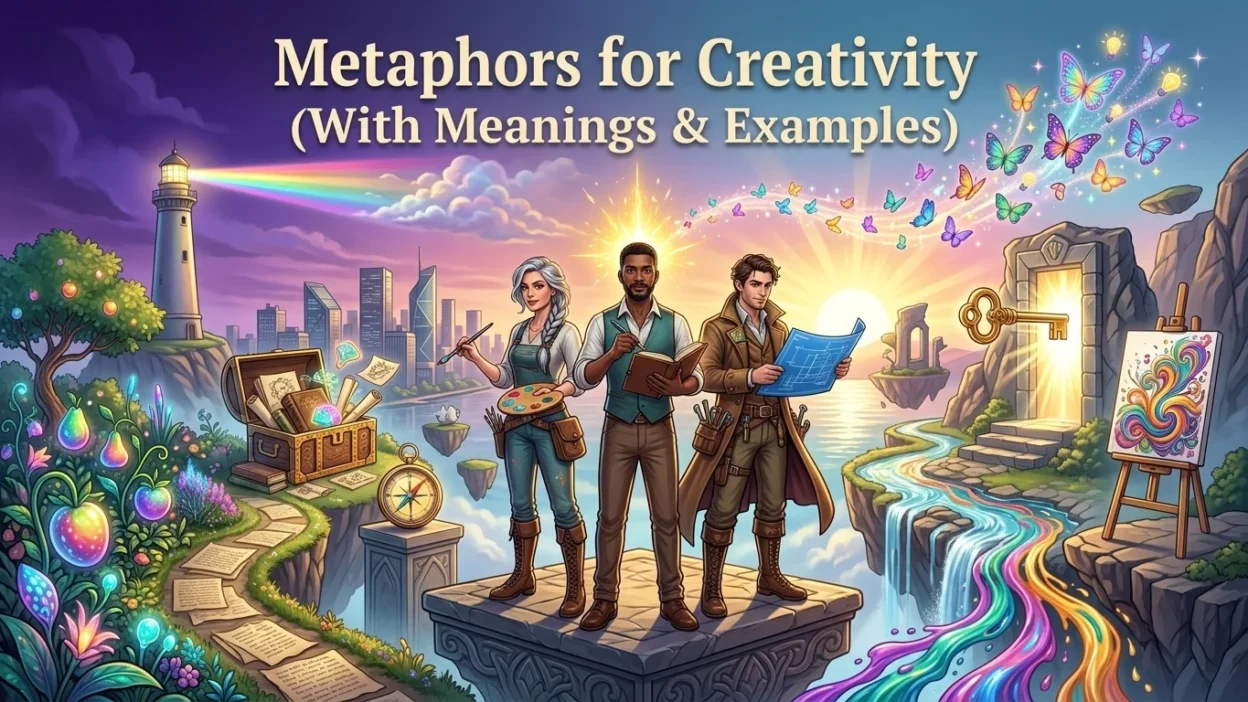
Creativity helps us think of new ideas, solve problems, and express ourselves in unique ways. Instead of simply saying someone is creative, writers often use metaphors for creativity to paint vivid pictures that readers can easily imagine.
A metaphor compares one thing directly to another without using “like” or “as.” For example, you might say, “Her mind is a garden.” Her mind is not really a garden, but the metaphor suggests that ideas grow and bloom with care.
In simple terms, metaphors make writing more colorful, engaging, and memorable. They are common in stories, poems, speeches, and everyday conversations. Unlike simile sentences, metaphors create direct comparisons that help readers understand ideas more deeply. Let’s explore 20 examples of metaphors for creativity and learn how to use metaphors in writing.
20 Metaphors for Creativity
1. The mind is a garden.
Meaning: Ideas grow with care.
Explanation: Creativity develops over time.
Example 1: His mind is a garden of fresh ideas.
Example 2: Reading helped the garden bloom.
2. Creativity is a spark.
Meaning: A small idea starts something big.
Explanation: Sparks can begin great things.
Example 1: Her idea was a spark.
Example 2: It inspired the whole team.
3. Imagination is a river.
Meaning: Ideas flow continuously.
Explanation: Rivers never stop moving.
Example 1: His imagination is a river.
Example 2: New ideas kept flowing.
4. Creativity is a key.
Meaning: It unlocks opportunities.
Explanation: Creative thinking opens new doors.
Example 1: Creativity became the key to success.
Example 2: It solved every challenge.
5. The brain is a workshop.
Meaning: Ideas are built and improved.
Explanation: Workshops are places of creation.
Example 1: Her brain is a busy workshop.
Example 2: Every thought became a new invention.
6. Creativity is a flame.
Meaning: Passion keeps ideas alive.
Explanation: Flames represent energy and inspiration.
Example 1: His creativity is a bright flame.
Example 2: It never stopped burning.
7. Ideas are seeds.
Meaning: Small ideas can grow into big achievements.
Explanation: Seeds become plants with care.
Example 1: Every idea is a seed.
Example 2: Time helped them grow.
8. Creativity is a rainbow.
Meaning: Full of color and possibilities.
Explanation: Rainbows symbolize beauty and variety.
Example 1: Her creativity is a rainbow.
Example 2: Every project looked different.
9. The imagination is a canvas.
Meaning: It holds endless possibilities.
Explanation: Artists create on a canvas.
Example 1: His imagination is a blank canvas.
Example 2: Every dream became a masterpiece.
10. Creativity is a lighthouse.
Meaning: It guides new ideas.
Explanation: Lighthouses provide direction.
Example 1: Creativity became our lighthouse.
Example 2: It showed us a better path.
11. Ideas are stars.
Meaning: They shine brightly.
Explanation: Great ideas stand out.
Example 1: Her ideas are stars.
Example 2: They lit up the discussion.
12. Creativity is a bridge.
Meaning: It connects imagination with reality.
Explanation: Bridges link two places.
Example 1: Creativity became a bridge.
Example 2: Dreams turned into action.
13. The mind is a treasure chest.
Meaning: It holds valuable ideas.
Explanation: Treasure chests contain hidden riches.
Example 1: His mind is a treasure chest.
Example 2: Every thought was valuable.
14. Creativity is an engine.
Meaning: It drives progress.
Explanation: Engines keep things moving.
Example 1: Creativity became the engine of innovation.
Example 2: It powered every project.
15. Imagination is the sky.
Meaning: It has no limits.
Explanation: The sky seems endless.
Example 1: Her imagination is the sky.
Example 2: Nothing limited her ideas.
16. Creativity is a puzzle.
Meaning: It brings pieces together.
Explanation: Creative thinking solves problems.
Example 1: Creativity solved the puzzle.
Example 2: Every piece found its place.
17. Ideas are butterflies.
Meaning: Ideas are beautiful but can disappear quickly.
Explanation: Butterflies are delicate and fleeting.
Example 1: His ideas were butterflies.
Example 2: He quickly wrote them down.
18. Creativity is a compass.
Meaning: It points toward new possibilities.
Explanation: A compass provides direction.
Example 1: Creativity became my compass.
Example 2: It guided every decision.
19. The imagination is an ocean.
Meaning: It is deep and limitless.
Explanation: Oceans hold endless wonders.
Example 1: Her imagination is an ocean.
Example 2: New discoveries never ended.
20. Creativity is a sunrise.
Meaning: It brings fresh beginnings.
Explanation: Every sunrise starts a new day.
Example 1: Creativity is a sunrise of ideas.
Example 2: Every morning inspired something new.
Practical Exercise
- What is a metaphor?
- Complete: The mind is a ________.
- Which metaphor represents endless ideas?
- Which metaphor symbolizes growth?
- What does “Creativity is a spark” mean?
- Which metaphor represents guidance?
- Which metaphor symbolizes valuable ideas?
- What does “Imagination is an ocean” suggest?
- Write your own metaphor for creativity.
- Why do writers use metaphors?
Answers
- A direct comparison without using “like” or “as.”
- Garden.
- Imagination is the sky or an ocean.
- Ideas are seeds.
- A small idea can grow into something great.
- Creativity is a lighthouse or a compass.
- The mind is a treasure chest.
- Imagination is deep and limitless.
- Answers will vary.
- Metaphors make writing more vivid, creative, and memorable.
Conclusion
Metaphors for creativity help writers explain imagination, innovation, and original thinking in powerful ways. Instead of simply saying someone is creative, you can compare creativity to a spark, a garden, a lighthouse, a treasure chest, or a sunrise. These examples of metaphors make your writing more engaging and easier to remember. Keep practicing by creating your own creative metaphors, and you’ll develop stronger storytelling and writing skills.

Gabriel Hudson is a skilled language writer and figurative language enthusiast at Metaphorox.com. He specializes in metaphors, similes, and idioms, creating engaging content that helps readers understand creative expressions and communicate more effectively.