Definition
When people search for metaphors for impulsive, they often want creative ways to describe unusual, wild, chaotic, or unpredictable behavior in writing. It’s important to remember that the word “impulsive“ can sometimes be used casually, but it can also refer to mental health in ways that may be hurtful. In creative writing, it’s usually better to describe the specific behavior or emotion you mean.
A metaphor compares one thing directly to another without using “like” or “as.” For example, saying “His mind is a whirlwind” creates a vivid picture of racing thoughts or confusion. In simple terms, metaphors make stories more interesting and memorable. Let’s explore 20 examples of metaphors for expressing chaos, unpredictability, or intense emotion in writing.
20 Metaphors for impulsive
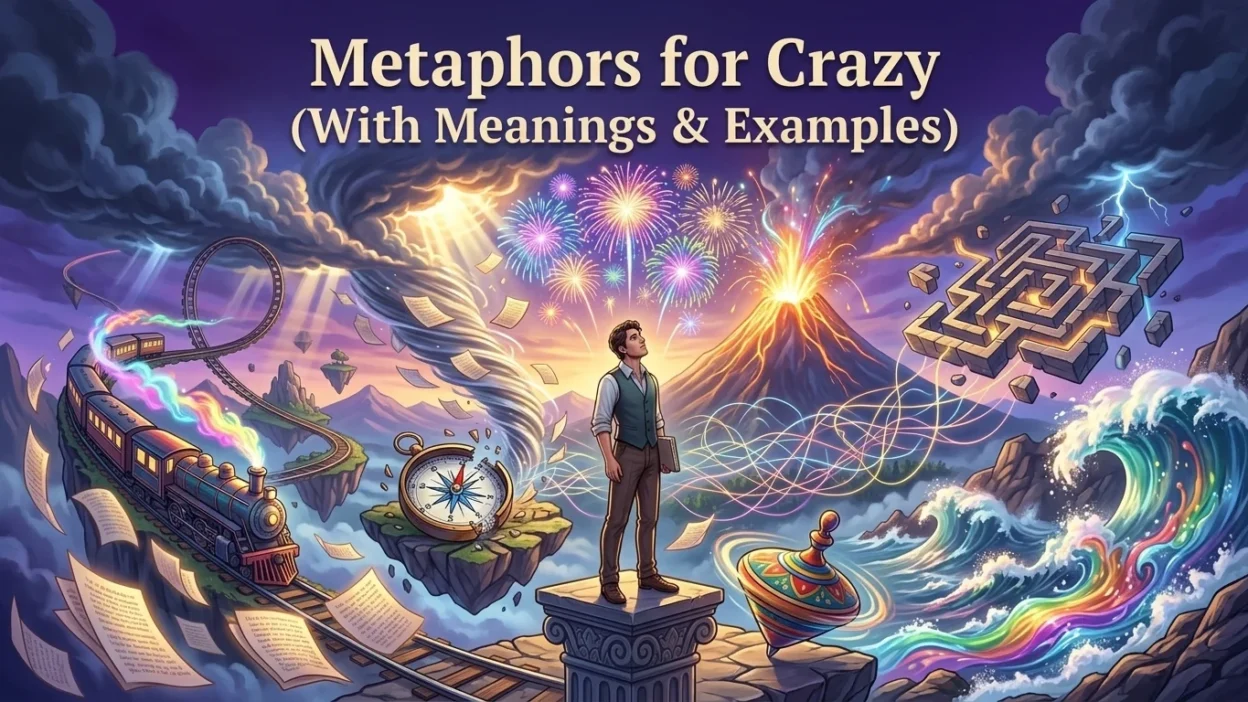
1. A whirlwind
Meaning: Full of chaotic energy.
Explanation: Suggests constant movement and confusion.
Example 1: His thoughts were a whirlwind.
Example 2: The day became a whirlwind of surprises.
2. A roller coaster
Meaning: Full of emotional ups and downs.
Explanation: Describes rapid changes.
Example 1: Her emotions were a roller coaster.
Example 2: The week was a roller coaster.
3. A volcano
Meaning: Ready to erupt.
Explanation: Represents bottled-up emotions.
Example 1: His anger was a volcano.
Example 2: She finally erupted.
4. A wildfire
Meaning: Spreading quickly and uncontrollably.
Explanation: Shows rapid intensity.
Example 1: Panic became a wildfire.
Example 2: Excitement spread like flames.
5. A tornado
Meaning: Destructive and unpredictable.
Explanation: Represents disorder.
Example 1: The meeting was a tornado.
Example 2: His entrance changed everything.
6. A ticking clock
Meaning: Building tension.
Explanation: Suggests pressure growing.
Example 1: His patience was a ticking clock.
Example 2: Everyone expected an explosion.
7. A maze
Meaning: Difficult to understand.
Explanation: Shows confusion.
Example 1: Her thoughts became a maze.
Example 2: I couldn’t find a clear answer.
8. A storm cloud
Meaning: Dark emotions gathering.
Explanation: Suggests trouble ahead.
Example 1: A storm cloud hung over him.
Example 2: The room felt tense.
9. A broken compass
Meaning: Lost or directionless.
Explanation: Represents uncertainty.
Example 1: His plans were a broken compass.
Example 2: She felt completely lost.
10. A runaway train
Meaning: Out of control.
Explanation: Difficult to stop.
Example 1: The situation became a runaway train.
Example 2: Events moved too fast.
11. A lightning strike
Meaning: Sudden and powerful.
12. A spinning top
Meaning: Dizzy or overwhelmed.
13. A cracked mirror
Meaning: Distorted perspective.
14. A tangled web
Meaning: Complex confusion.
15. A pressure cooker
Meaning: Intense stress building.
16. A puppet on strings
Meaning: Controlled by emotions.
17. A chessboard
Meaning: Constant mental strategy.
18. A bouncing ball
Meaning: Restless energy.
19. A fireworks display
Meaning: Explosive excitement or emotion.
20. A crashing wave
Meaning: Overwhelming feelings.
Practical Exercise
- What is a metaphor?
- Complete: His thoughts were a ________.
- Which metaphor means “out of control”?
- Which metaphor shows confusion?
- What does “a whirlwind” suggest?
- Which metaphor represents growing pressure?
- Which metaphor symbolizes uncertainty?
- Write your own metaphor for intense excitement.
- Why do writers use metaphors?
- Which metaphor best describes emotional ups and downs?
Answers
- A direct comparison without using “like” or “as.”
- Whirlwind.
- A runaway train.
- A maze.
- Chaos and fast movement.
- A pressure cooker.
- A broken compass.
- Answers will vary.
- To make writing vivid and engaging.
- A roller coaster.
Conclusion
Metaphors help writers describe strong emotions, confusion, chaos, and unpredictable situations in a vivid way. Instead of relying on the word “impulsive,” you can use descriptive metaphors such as a whirlwind, a runaway train, a volcano, or a maze to paint a clearer picture for your readers. Keep practicing these examples of metaphors and create your own creative writing metaphors to make your stories more powerful and memorable.

Michael Luca is a dedicated content writer at Metaphorox.com, specializing in metaphors, similes, and idioms. He develops informative and engaging articles that help readers enhance their language skills and understand figurative expressions more effectively.