Definition
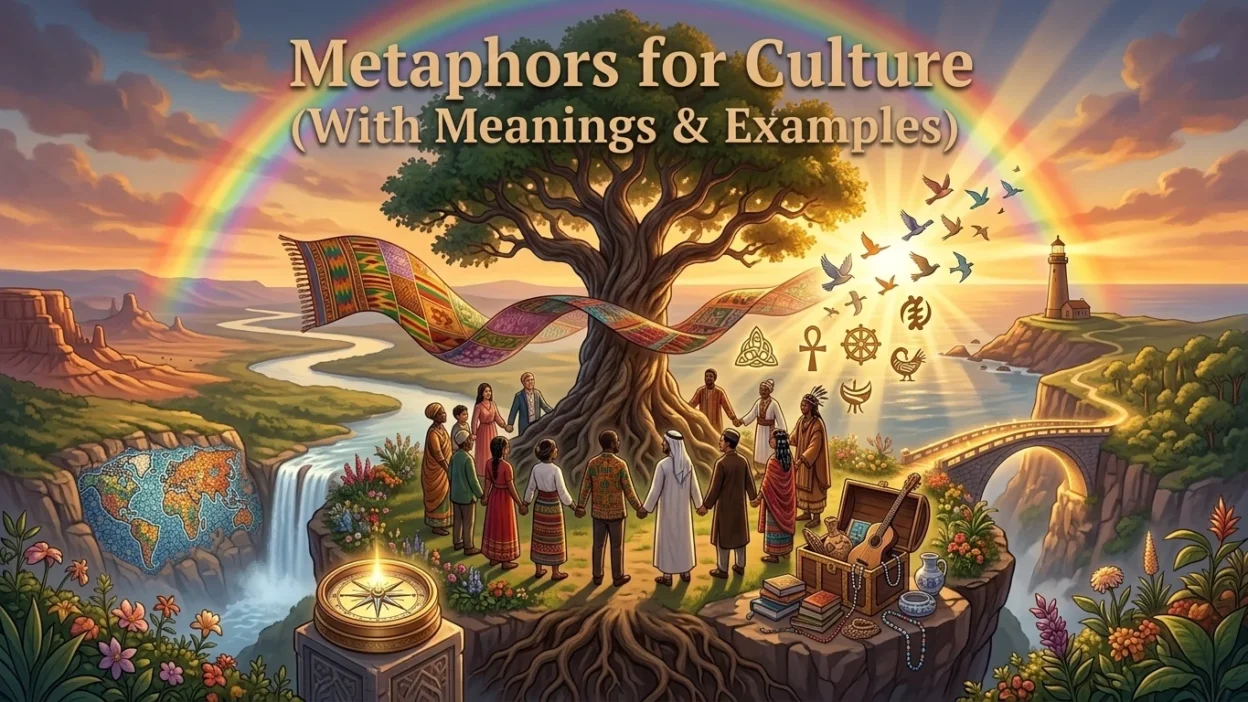
Culture shapes the way people live, communicate, celebrate, and share traditions. When writing about culture, metaphors help explain complex ideas through simple and memorable comparisons. Instead of giving a long definition, you can describe culture as a bridge, a tapestry, or a tree with deep roots.
A metaphor is a direct comparison that does not use “like” or “as.” In simple terms, it helps readers picture ideas more clearly. Metaphors make essays, stories, speeches, and creative writing more engaging. They also help readers understand how traditions, beliefs, and values connect people across generations. Let’s explore 20 metaphors for culture and learn how to use metaphors in writing.
20 Metaphors for Culture
1. A tapestry
Meaning: Many traditions woven together.
Explanation: Different threads create one beautiful design.
Example 1: Our culture is a rich tapestry.
Example 2: Every tradition adds another thread.
2. A bridge
Meaning: Connects people and communities.
Explanation: Culture brings different groups together.
Example 1: Culture is a bridge between generations.
Example 2: Music built a cultural bridge.
3. A tree
Meaning: Deep roots and steady growth.
Explanation: Traditions grow over time.
Example 1: Our culture is a strong tree.
Example 2: Its roots reach far into history.
4. A river
Meaning: Always changing while continuing to flow.
Explanation: Culture evolves over time.
Example 1: Culture is a flowing river.
Example 2: New ideas joined the current.
5. A mosaic
Meaning: Many unique parts forming one whole.
Explanation: Diversity creates beauty.
Example 1: Society is a colorful mosaic.
Example 2: Every community adds a piece.
6. A garden
Meaning: Different traditions grow together.
Explanation: Diversity strengthens culture.
Example 1: Our culture is a thriving garden.
Example 2: Every custom is a new flower.
7. A compass
Meaning: Provides guidance.
Explanation: Culture influences choices and values.
Example 1: Culture is our compass.
Example 2: It points us toward our identity.
8. A mirror
Meaning: Reflects who people are.
Explanation: Culture reveals beliefs and values.
Example 1: Culture is a mirror.
Example 2: It reflects our shared history.
9. A foundation
Meaning: Supports society.
Explanation: Strong values create stability.
Example 1: Culture is the foundation of a nation.
Example 2: Traditions keep it strong.
10. A treasure chest
Meaning: Full of valuable traditions.
Explanation: Culture preserves wisdom.
Example 1: Our heritage is a treasure chest.
Example 2: Every story is a precious gem.
11. A flame
Meaning: Traditions passed forward.
12. A lighthouse
Meaning: Guidance through change.
13. A rainbow
Meaning: Diversity and unity.
14. A heartbeat
Meaning: The life of a community.
15. A quilt
Meaning: Different pieces joined together.
16. A library
Meaning: Shared knowledge and history.
17. A symphony
Meaning: Many voices creating harmony.
18. A chain
Meaning: Connection across generations.
19. A home
Meaning: Belonging and identity.
20. A seed
Meaning: Traditions that grow into the future.
Practical Exercise
- What is a metaphor?
- Complete: Culture is a ________.
- Which metaphor represents diversity?
- Which metaphor symbolizes growth?
- What does “a bridge” represent?
- Which metaphor reflects identity?
- Which metaphor means shared history?
- Write your own metaphor for culture.
- Why do writers use metaphors?
- Which metaphor best describes traditions?
Answers
- A direct comparison without using “like” or “as.”
- Answers may vary.
- A mosaic, a tapestry, or a rainbow.
- A tree or a seed.
- Connection between people.
- A mirror.
- A library or a treasure chest.
- Answers will vary.
- To make writing vivid and easier to understand.
- A tree, a chain, or a treasure chest.
Conclusion
Metaphors for culture help explain traditions, beliefs, identity, and community in a simple but powerful way. Instead of using long descriptions, you can compare culture to a tapestry, a bridge, a river, or a tree to create memorable images. These examples of metaphors make creative writing more engaging and meaningful. Keep practicing your own metaphors, and you’ll become a more confident and expressive writer.

Gabriel Hudson is a skilled language writer and figurative language enthusiast at Metaphorox.com. He specializes in metaphors, similes, and idioms, creating engaging content that helps readers understand creative expressions and communicate more effectively.