Definition
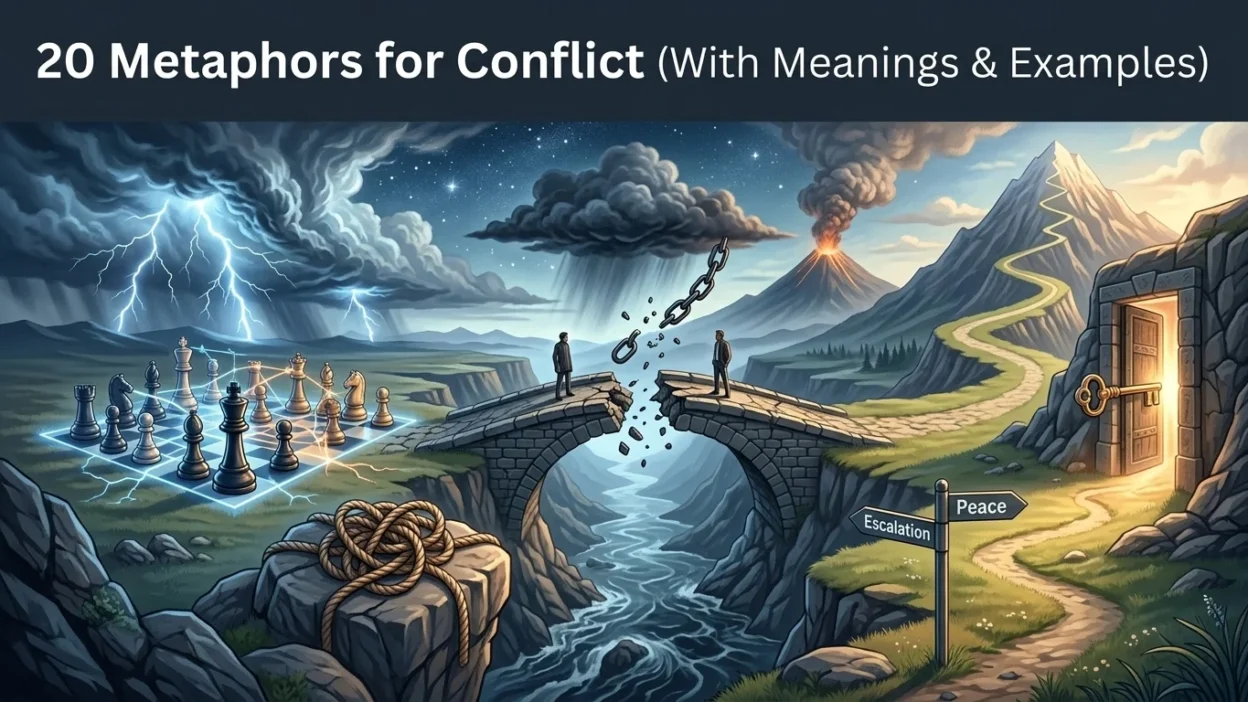
Conflict is a natural part of life. It can happen between people, ideas, emotions, or even within ourselves. Instead of simply saying there was a disagreement, writers use metaphors for conflict to make tension, struggle, and resolution more vivid.
A metaphor compares one thing directly to another without using “like” or “as.” For example, you might say, “Conflict is a storm.” Conflict is not an actual storm, but the comparison helps readers picture its power, unpredictability, and emotional impact.
In simple terms, metaphors make writing stronger and more memorable. They are useful in stories, poems, speeches, and essays. Unlike simile sentences, metaphors create direct comparisons that add depth and emotion. Let’s explore 20 examples of metaphors for conflict and learn how to use metaphors in writing.
20 Metaphors for Conflict
1. Conflict is a storm.
Meaning: Conflict is intense and unpredictable.
Explanation: Storms bring chaos and strong emotions.
Example 1: Their argument became a fierce storm.
Example 2: The storm finally passed after they talked.
2. Conflict is a battlefield.
Meaning: Conflict is a struggle between opposing sides.
Explanation: A battlefield represents competition and tension.
Example 1: The meeting became a battlefield of ideas.
Example 2: Everyone fought to defend their opinions.
3. Conflict is a fire.
Meaning: Conflict spreads quickly if ignored.
Explanation: Fire grows without control.
Example 1: Their disagreement became a fire.
Example 2: Kind words helped extinguish the fire.
4. Conflict is a knot.
Meaning: Conflict is difficult to untangle.
Explanation: Knots require patience to solve.
Example 1: Their misunderstanding became a knot.
Example 2: Honest communication untied the knot.
5. Conflict is a wall.
Meaning: Conflict creates distance between people.
Explanation: Walls separate individuals.
Example 1: Anger built a wall between them.
Example 2: Forgiveness slowly broke down the wall.
6. Conflict is a volcano.
Meaning: Conflict builds pressure before exploding.
Explanation: Volcanoes erupt after pressure grows.
Example 1: His frustration was a volcano.
Example 2: The volcano erupted during the discussion.
7. Conflict is a tug-of-war.
Meaning: Two sides pull in opposite directions.
Explanation: Both sides struggle for control.
Example 1: The debate became a tug-of-war.
Example 2: Neither side wanted to let go.
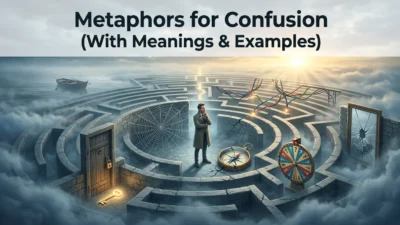
8. Conflict is a maze.
Meaning: Conflict can be confusing.
Explanation: A maze is difficult to navigate.
Example 1: They wandered through a maze of disagreements.
Example 2: Patience helped them find the exit.
9. Conflict is an earthquake.
Meaning: Conflict suddenly changes everything.
Explanation: Earthquakes shake what once seemed stable.
Example 1: The news caused an earthquake in the family.
Example 2: Trust had to be rebuilt afterward.
10. Conflict is a chess game.
Meaning: Conflict requires careful thinking.
Explanation: Every move has consequences.
Example 1: Their negotiation became a chess game.
Example 2: Each decision changed the outcome.
11. Conflict is a shadow.
Meaning: Conflict follows people until resolved.
Explanation: Shadows remain close.
Example 1: The disagreement became a shadow.
Example 2: It disappeared after reconciliation.
12. Conflict is a broken bridge.
Meaning: Relationships have been damaged.
Explanation: Bridges connect people.
Example 1: Their friendship became a broken bridge.
Example 2: Trust repaired the bridge.
13. Conflict is a ticking clock.
Meaning: Problems become more urgent with time.
Explanation: Delays increase pressure.
Example 1: Their disagreement became a ticking clock.
Example 2: They solved it before time ran out.
14. Conflict is a heavy chain.
Meaning: Conflict feels difficult to escape.
Explanation: Chains symbolize restriction.
Example 1: Anger became a heavy chain.
Example 2: Forgiveness broke the chain.
15. Conflict is rough water.
Meaning: Conflict creates instability.
Explanation: Rough water makes travel difficult.
Example 1: Their relationship entered rough water.
Example 2: Calm discussion brought smoother seas.
16. Conflict is a locked door.
Meaning: Conflict blocks progress.
Explanation: Locked doors prevent movement.
Example 1: Pride became a locked door.
Example 2: Understanding opened the door.
17. Conflict is a dark cloud.
Meaning: Conflict creates worry and tension.
Explanation: Dark clouds symbolize trouble.
Example 1: A dark cloud hung over the office.
Example 2: The cloud disappeared after the agreement.
18. Conflict is a cracked mirror.
Meaning: Conflict damages trust or understanding.
Explanation: A cracked mirror cannot reflect perfectly.
Example 1: Their trust became a cracked mirror.
Example 2: It took time to repair the damage.
19. Conflict is a mountain.
Meaning: Conflict feels difficult to overcome.
Explanation: Mountains require effort to climb.
Example 1: The disagreement seemed like a mountain.
Example 2: Together, they reached the top.
20. Conflict is a crossroads.
Meaning: Conflict forces an important decision.
Explanation: Crossroads represent choosing a direction.
Example 1: Their argument brought them to a crossroads.
Example 2: They chose understanding over anger.
Practical Exercise
- What is a metaphor?
- Complete: Conflict is a ________.
- Which metaphor represents growing anger?
- Which metaphor suggests damaged relationships?
- What does “Conflict is a knot” mean?
- Which metaphor represents careful planning?
- Which metaphor symbolizes urgency?
- What does “Conflict is a mountain” suggest?
- Write your own metaphor for conflict.
- Why do writers use metaphors for conflict?
Answers
- A direct comparison without using “like” or “as.”
- Storm (or any suitable metaphor).
- Conflict is a fire or a volcano.
- Conflict is a broken bridge.
- Conflict can be difficult to solve.
- Conflict is a chess game.
- Conflict is a ticking clock.
- Conflict feels difficult to overcome.
- Answers will vary.
- Metaphors make conflict easier to imagine, understand, and remember.
Conclusion
Metaphors for conflict help writers describe disagreements, struggles, and challenges in creative ways. Instead of simply saying people argued, you can describe conflict as a storm, a battlefield, a knot, a broken bridge, or a mountain. These examples of metaphors make stories, essays, and poems more vivid and emotional. Try creating your own metaphors by thinking about what conflict feels like to you. With practice, your creative writing will become stronger, more engaging, and more memorable.
Gabriel Hudson is a skilled language writer and figurative language enthusiast at Metaphorox.com. He specializes in metaphors, similes, and idioms, creating engaging content that helps readers understand creative expressions and communicate more effectively.