Introduction
Have you ever struggled to describe hatred without repeating the word hate over and over? If so, you’re not alone. Many writers use metaphors for hate to express strong emotions in a more vivid and memorable way. Instead of simply saying someone hated something, you can compare that feeling to a raging fire, a poisonous vine, or a heavy storm. These creative comparisons help readers see and feel the emotion instead of just reading about it.
In simple terms, a metaphor is a figure of speech that compares one thing to another without using the words like or as. Writers often use metaphors to add emotion, depth, and creativity to stories, poems, speeches, and everyday writing. They make ideas easier to imagine while keeping readers interested from beginning to end.
Let’s explore 20 metaphors for hate, learn their meanings, and discover how to use them naturally in your writing.
What Are Metaphors?
A metaphor is a direct comparison between two different things. It helps explain an idea by giving it the qualities of something else.
For example:
- Hate is a wildfire.
- His anger became a poison.
These examples of metaphors make emotions easier to understand because they create strong mental images. As a result, your writing becomes more engaging and memorable.
20 Metaphors for Hate
1. Hate Is a Wildfire
Meaning: Hate spreads quickly and causes damage.
Explanation: Just as a wildfire grows rapidly, hate can spread through people and communities.
Example 1: Hate became a wildfire that divided the neighborhood.
Example 2: One cruel rumor turned into a wildfire of resentment.
2. Hate Is Poison
Meaning: Hate harms the person holding it.
Explanation: Like poison, hate slowly damages emotions and relationships.
Example 1: His hate was poison in his heart.
Example 2: She refused to let poison control her life.
3. Hate Is a Heavy Chain
Meaning: Hate keeps people trapped.
Explanation: It prevents emotional freedom and peace.
Example 1: Hate became a heavy chain around his spirit.
Example 2: She finally broke the chain by forgiving.
4. Hate Is a Dark Cloud
Meaning: Hate overshadows happiness.
Explanation: It blocks joy and hope.
Example 1: A dark cloud settled over the family.
Example 2: Hate covered every happy moment.
5. Hate Is a Burning Fire
Meaning: Hate consumes everything.
Explanation: Fire represents destructive emotions.
Example 1: His hatred burned like an endless fire.
Example 2: The fire destroyed their friendship.
6. Hate Is a Sharp Knife
Meaning: Hate causes emotional pain.
Explanation: Words fueled by hate can hurt deeply.
Example 1: Her hateful words became a sharp knife.
Example 2: Every insult cut deeper.
7. Hate Is a Storm
Meaning: Hate creates chaos.
Explanation: Storms symbolize emotional conflict.
Example 1: A storm of hate swept through the room.
Example 2: Their argument grew into a violent storm.
8. Hate Is a Cage
Meaning: Hate limits emotional freedom.
Explanation: Holding onto hate traps people mentally.
Example 1: He lived inside a cage of hate.
Example 2: Forgiveness unlocked the door.
9. Hate Is Ice
Meaning: Hate makes people emotionally cold.
Explanation: Ice symbolizes a lack of warmth.
Example 1: Ice filled his heart.
Example 2: Her cold silence revealed deep hate.
10. Hate Is a Weed
Meaning: Hate grows if ignored.
Explanation: Like weeds, hate spreads without care.
Example 1: Hate became a weed in his mind.
Example 2: It spread until kindness disappeared.
11. Hate Is a Prison
Meaning: Hate keeps people emotionally trapped.
Explanation: It prevents peace and healing.
Example 1: He remained inside a prison of hate.
Example 2: Forgiveness opened the prison gate.
12. Hate Is a Volcano
Meaning: Hate eventually explodes.
Explanation: Hidden emotions often erupt suddenly.
Example 1: His anger became a volcano.
Example 2: Years of resentment erupted at once.
13. Hate Is Rust
Meaning: Hate slowly destroys from within.
Explanation: Rust weakens strong things over time.
Example 1: Hate was rust on his happiness.
Example 2: It quietly damaged every relationship.
14. Hate Is a Snake
Meaning: Hate can be dangerous and deceptive.
Explanation: Snakes often symbolize hidden danger.
Example 1: Hate slithered into the conversation.
Example 2: The snake struck when nobody expected it.
15. Hate Is a Wall
Meaning: Hate separates people.
Explanation: Walls create distance and division.
Example 1: A wall of hate stood between them.
Example 2: Trust slowly tore the wall down.
16. Hate Is a Shadow
Meaning: Hate follows people constantly.
Explanation: Shadows remain close until light appears.
Example 1: Hate became his constant shadow.
Example 2: Kindness finally chased the shadow away.
17. Hate Is a Tornado
Meaning: Hate leaves destruction behind.
Explanation: Tornadoes damage everything in their path.
Example 1: Their hatred became a tornado.
Example 2: Nothing remained untouched afterward.
18. Hate Is a Disease
Meaning: Hate spreads from person to person.
Explanation: Negative emotions can influence others.
Example 1: Hate became a disease in the community.
Example 2: Compassion helped stop its spread.
19. Hate Is a Black Hole
Meaning: Hate consumes happiness.
Explanation: A black hole pulls everything inward.
Example 1: His hate became a black hole.
Example 2: It swallowed every joyful memory.
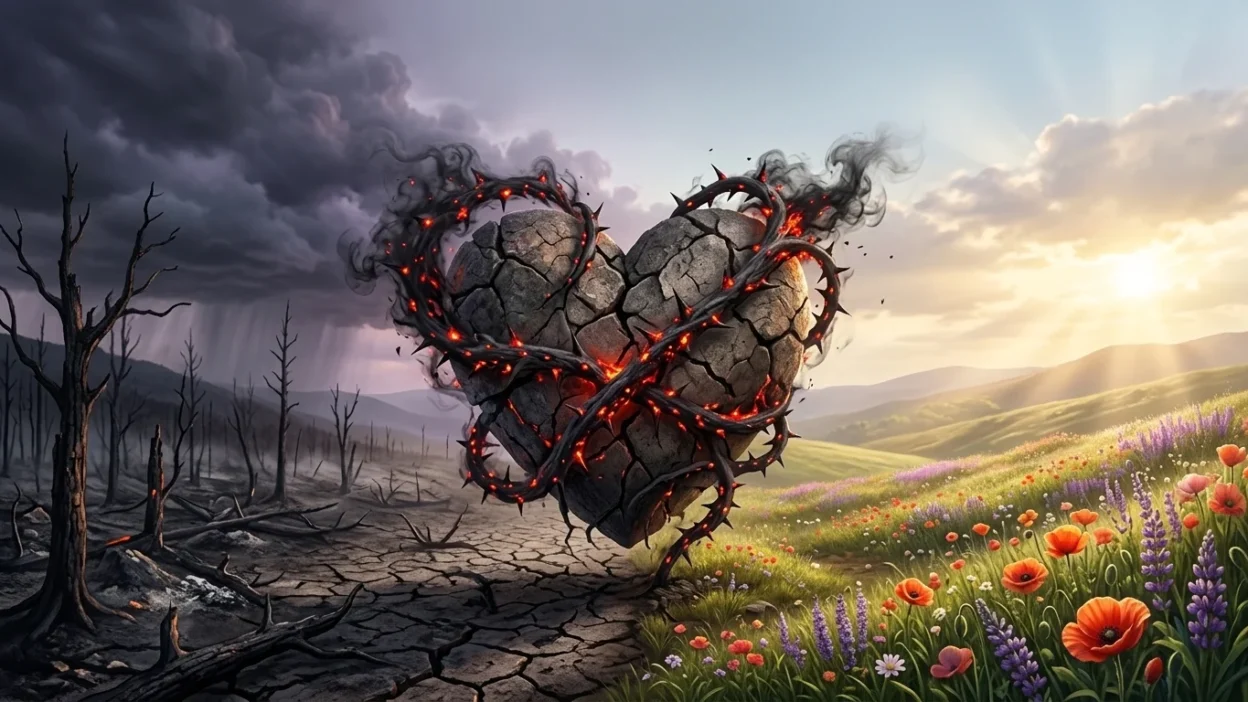
20. Hate Is a Thorn Bush
Meaning: Hate hurts anyone who gets close.
Explanation: Thorns symbolize pain and conflict.
Example 1: Their relationship became a thorn bush.
Example 2: Every conversation ended in pain.
Practical Exercise
Questions
- What is a metaphor?
- Complete the sentence: Hate is a ________ that spreads quickly.
- Which metaphor represents emotional pain?
- Which metaphor symbolizes being trapped?
- What does “Hate is poison” mean?
- Which metaphor shows hidden danger?
- Which metaphor represents emotional coldness?
- Write your own metaphor for hate.
- Why do writers use metaphors?
- Which metaphor best describes hate spreading through a community?
Answers
- A metaphor is a direct comparison without using like or as.
- Wildfire.
- A sharp knife.
- A cage or a prison.
- Hate harms the person who holds it.
- A snake.
- Ice.
- Answers will vary.
- Writers use metaphors to create vivid images, express emotions clearly, and make writing more engaging.
- A wildfire or a disease.
Conclusion
Metaphors for hate help writers express powerful emotions in creative and memorable ways. Instead of repeating the word hate, you can compare it to a wildfire, poison, a prison, or a storm to create stronger imagery and deeper emotional impact. As you continue writing, try creating your own metaphors by thinking about how hate behaves or feels. With regular practice, you’ll discover that metaphors make your stories, poems, essays, and speeches far more vivid and engaging. The more you experiment with creative writing metaphors, the more confidently you’ll communicate emotions and connect with your readers.