Introduction
Emotions shape our thoughts, actions, and relationships every day. We all experience happiness, sadness, fear, anger, hope, and love. However, simply naming an emotion doesn’t always capture its true depth. That’s why writers often use metaphors. A metaphor compares one thing to another without using the words like or as. As a result, it helps readers see and feel emotions in a more vivid way.
For example, instead of saying, “She felt happy,” you could write, “Joy was the sunshine in her heart.” This metaphor paints a bright picture and immediately helps readers understand her feelings. Likewise, instead of saying, “He was angry,” you might write, “His anger was a volcano.”
In simple terms, metaphors make emotions easier to imagine and remember. They also add beauty, creativity, and depth to stories, poems, speeches, and everyday writing. Whether you’re a beginner or an experienced writer, learning how to use metaphors in writing will strengthen your creative skills.
So, let’s explore 20 metaphors for emotions, discover their meanings, read practical examples, and practice creating your own.
What Is a Metaphor?
A metaphor is a figure of speech that says one thing is another to create a direct comparison. Unlike a simile, a metaphor does not use like or as.
Example
Her happiness is sunshine.
This doesn’t mean happiness is literally sunshine. Instead, it means happiness brings warmth, brightness, and comfort.
The meaning of metaphors is to express ideas and emotions through creative comparisons that make writing more engaging.
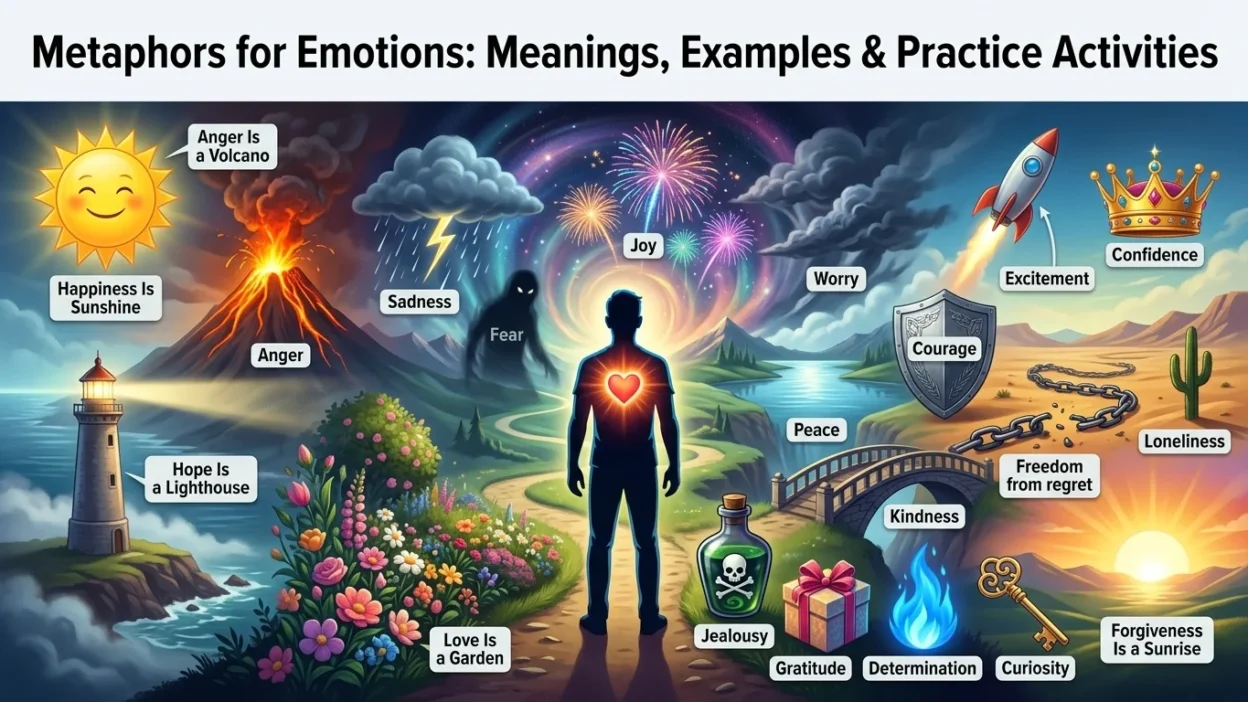
20 Metaphors for Emotions
1. Happiness Is Sunshine
Meaning: Happiness brings warmth and joy.
Explanation: Sunshine brightens everything around it.
Example Sentences:
- Her happiness is sunshine in our home.
- His smile became sunshine after the good news.
2. Anger Is a Volcano
Meaning: Anger can erupt suddenly.
Explanation: Volcanoes release powerful energy.
Example Sentences:
- His anger is a volcano waiting to erupt.
- Her frustration became a volcano.
3. Sadness Is a Heavy Rain
Meaning: Sadness feels overwhelming.
Explanation: Heavy rain can make everything seem gloomy.
Example Sentences:
- Sadness is a heavy rain over her heart.
- Grief became a heavy rain that lasted for days.
4. Fear Is a Shadow
Meaning: Fear follows you closely.
Explanation: Shadows stay nearby until light changes.
Example Sentences:
- Fear is a shadow in his mind.
- Anxiety became a shadow during the journey.
5. Hope Is a Lighthouse
Meaning: Hope guides people through difficult times.
Explanation: Lighthouses lead ships safely.
Example Sentences:
- Hope is a lighthouse in every storm.
- Her dream became a lighthouse.
6. Love Is a Garden
Meaning: Love grows with care.
Explanation: Gardens flourish through attention and patience.
Example Sentences:
- Their love is a beautiful garden.
- Kindness helped the garden bloom.
7. Joy Is a Firework
Meaning: Joy bursts with excitement.
Explanation: Fireworks are bright and celebratory.
Example Sentences:
- Joy is a firework in her heart.
- The victory became a firework of happiness.
8. Worry Is a Storm
Meaning: Worry creates confusion and stress.
Explanation: Storms bring strong winds and uncertainty.
Example Sentences:
- Worry is a storm in his thoughts.
- Her fears became a storm.
9. Peace Is a Calm Lake
Meaning: Peace brings quiet and balance.
Explanation: Calm lakes are still and relaxing.
Example Sentences:
- Peace is a calm lake.
- Meditation turned his mind into a calm lake.
10. Courage Is a Shield
Meaning: Courage protects you from fear.
Explanation: Shields defend against danger.
Example Sentences:
- Courage is her strongest shield.
- Confidence became his shield.
11. Excitement Is a Rocket
Meaning: Excitement lifts your energy.
Explanation: Rockets rise with great force.
Example Sentences:
- Excitement is a rocket inside him.
- The concert became a rocket of joy.
12. Loneliness Is a Desert
Meaning: Loneliness feels empty.
Explanation: Deserts are vast and isolated.
Example Sentences:
- Loneliness is a desert.
- His heart became a desert after the move.
13. Confidence Is a Crown
Meaning: Confidence makes you feel strong.
Explanation: Crowns symbolize dignity and leadership.
Example Sentences:
- Confidence is her crown.
- Self-belief became his crown.
14. Regret Is a Chain
Meaning: Regret can hold you back.
Explanation: Chains limit movement.
Example Sentences:
- Regret is a heavy chain.
- He finally broke the chain.
15. Kindness Is a Bridge
Meaning: Kindness connects people.
Explanation: Bridges bring people together.
Example Sentences:
- Kindness is a bridge between strangers.
- Her words became a bridge.
16. Jealousy Is a Poison
Meaning: Jealousy damages relationships.
Explanation: Poison slowly causes harm.
Example Sentences:
- Jealousy is a poison.
- Envy became poison in the friendship.
17. Gratitude Is a Gift
Meaning: Thankfulness enriches life.
Explanation: Gifts bring joy and appreciation.
Example Sentences:
- Gratitude is a priceless gift.
- Her thankful heart became a gift to everyone.
18. Determination Is a Flame
Meaning: Determination keeps burning.
Explanation: Flames continue shining when protected.
Example Sentences:
- Determination is a bright flame.
- His dream kept the flame alive.
19. Curiosity Is a Key
Meaning: Curiosity opens knowledge.
Explanation: Keys unlock new places.
Example Sentences:
- Curiosity is the key to learning.
- Questions became the key to discovery.
20. Forgiveness Is a Sunrise
Meaning: Forgiveness creates a fresh beginning.
Explanation: Every sunrise marks a new day.
Example Sentences:
- Forgiveness is a sunrise.
- Their friendship welcomed a new sunrise.
Practical Exercise
Questions
- Complete the metaphor: Happiness is ______.
- Which metaphor represents anger?
- What does hope is a lighthouse mean?
- Complete the metaphor: Fear is a ______.
- Which metaphor represents peace?
- What does love is a garden suggest?
- Complete the metaphor: Confidence is a ______.
- Which metaphor symbolizes loneliness?
- What does gratitude is a gift represent?
- Which metaphor means forgiveness brings a fresh start?
Answers and Explanations
1. Sunshine – Happiness brings warmth and joy.
2. A Volcano – Anger can erupt with great force.
3. Hope guides people – A lighthouse helps people find the right direction.
4. Shadow – Fear often follows people closely.
5. A Calm Lake – Peace creates balance and stillness.
6. Love grows with care – Healthy relationships need attention.
7. Crown – Confidence makes people feel strong and capable.
8. A Desert – Loneliness feels empty and isolated.
9. Appreciation – Gratitude enriches life and relationships.
10. A Sunrise – Forgiveness offers a new beginning.
How to Create Your Own Metaphors
Creating metaphors is simple.
1: First, choose an emotion.
2: Next, think of an object or part of nature that shares the same qualities.
3: Then, say the emotion is that object without using like or as.
Examples
- Hope is a rising kite.
- Fear is a locked door.
- Joy is a dancing flame.
The more you practice, the more naturally you’ll use creative writing metaphors. As a result, your writing will become stronger, more expressive, and easier to remember.
Conclusion
Metaphors help you express emotions with greater depth and creativity. Instead of simply naming a feeling, they allow readers to see, imagine, and connect with it. Throughout this guide, you’ve explored examples of metaphors, learned the meaning of metaphors, and practiced using them through simple exercises.
Now it’s your turn. Choose an emotion you often experience and turn it into a meaningful metaphor. With regular practice, you’ll master how to use metaphors in writing and create stories, poems, and essays that leave a lasting impression.

Michael Luca is a dedicated content writer at Metaphorox.com, specializing in metaphors, similes, and idioms. He develops informative and engaging articles that help readers enhance their language skills and understand figurative expressions more effectively.