Introduction
Death is one of the most meaningful themes in literature, poetry, and storytelling. Because it can be difficult to talk about directly, writers often use metaphors to express its meaning in thoughtful and creative ways. A metaphor compares one thing to another without using the words like or as. Instead of saying, “Death is like a journey,” a metaphor simply says, “Death is a journey.”
In simple terms, metaphors help readers picture ideas and emotions more clearly. They add depth to writing and encourage readers to think beyond the literal meaning of words. Whether you’re writing a poem, a short story, or an essay, understanding metaphors can make your work more engaging and memorable.
In this guide, you’ll explore 20 metaphors for death, learn what each one means, see examples of metaphors in context, and practice identifying and creating your own. These examples are intended for creative writing and literary analysis, showing how authors use figurative language to express complex ideas.
What Is a Metaphor?
A metaphor is a figure of speech that directly describes one thing as another to create a stronger image or idea.
Example:
Death is a closed book.
This doesn’t mean death is literally a book. It suggests that one chapter has ended and no new pages can be added.
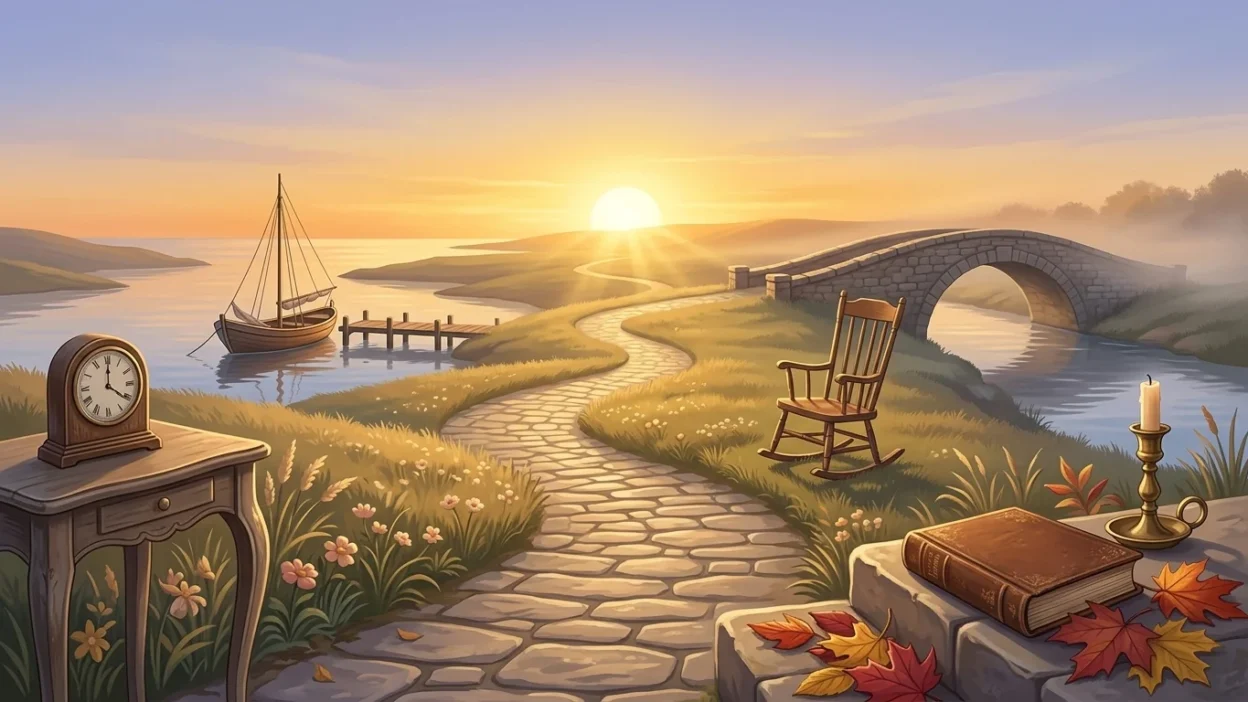
20 Metaphors for Death
1. Death Is a Final Chapter
Meaning: The end of life’s story.
Explanation: A book ends with its last chapter.
Examples:
- The final chapter had been written.
- Every story eventually reaches its final chapter.
2. Death Is a Quiet Sunset
Meaning: A peaceful ending.
Explanation: Sunsets symbolize the close of a day.
Examples:
- The quiet sunset marked the journey’s end.
- Every sunset reminds us that endings can be peaceful.
3. Death Is a Closed Door
Meaning: The end of one path.
Explanation: A closed door represents something finished.
Examples:
- The closed door ended the journey.
- One door closed while memories remained.
4. Death Is the Last Train
Meaning: A final departure.
Explanation: A train leaving the station symbolizes moving on.
Examples:
- The last train had departed.
- Everyone eventually boards the last train.
5. Death Is a Silent River
Meaning: A calm transition.
Explanation: Rivers often symbolize life’s journey.
Examples:
- The silent river carried the story onward.
- The river flowed without a sound.
6. Death Is an Empty Stage
Meaning: A performance has ended.
Explanation: A stage becomes empty after the show.
Examples:
- The empty stage held only memories.
- The curtain fell on the empty stage.
7. Death Is a Fallen Leaf
Meaning: A natural part of life’s cycle.
Explanation: Leaves fall as seasons change.
Examples:
- The fallen leaf returned to the earth.
- Autumn reminds us of the fallen leaf.
8. Death Is a Sleeping Candle
Meaning: Life’s light has gone out.
Explanation: A candle symbolizes life.
Examples:
- The candle rested in silence.
- The sleeping candle ended its glow.
9. Death Is a Silent Clock
Meaning: Time has stopped.
Explanation: A clock no longer ticking represents life’s end.
Examples:
- The silent clock marked the moment.
- The clock no longer measured time.
10. Death Is a Broken Bridge
Meaning: A completed crossing.
Explanation: A bridge connects one place to another.
Examples:
- The broken bridge ended the crossing.
- Beyond the bridge lay memories.
11. Death Is an Unwritten Tomorrow
Meaning: The future has ended.
Explanation: No new pages remain to be written.
Examples:
- Tomorrow stayed unwritten.
- The story paused before tomorrow.
12. Death Is a Resting Harbor
Meaning: A place of rest.
Explanation: Harbors provide safety after long journeys.
Examples:
- The harbor welcomed the traveler.
- Every voyage seeks its harbor.
13. Death Is the Last Bell
Meaning: The final moment.
Explanation: Bells often mark beginnings and endings.
Examples:
- The last bell echoed softly.
- The bell ended the day.
14. Death Is a Fading Star
Meaning: A life slowly ending.
Explanation: Stars eventually fade from view.
Examples:
- The fading star disappeared into dawn.
- One star quietly left the sky.
15. Death Is an Empty Chair
Meaning: Someone is no longer present.
Explanation: An empty chair symbolizes absence.
Examples:
- The empty chair spoke without words.
- Everyone noticed the empty chair.
16. Death Is the Final Page
Meaning: The story has ended.
Explanation: Books finish on the last page.
Examples:
- The final page closed gently.
- Every tale reaches its final page.
17. Death Is a Quiet Harbor
Meaning: A peaceful resting place.
Explanation: Harbors symbolize safety and calm.
Examples:
- The quiet harbor welcomed every traveler.
- The journey ended at the quiet harbor.
18. Death Is the Setting Sun
Meaning: The natural close of life.
Explanation: The day ends with sunset.
Examples:
- The setting sun completed the day.
- Evening arrived with the setting sun.
19. Death Is a Finished Symphony
Meaning: A beautiful life completed.
Explanation: Music ends after the final note.
Examples:
- The symphony reached its last note.
- Every masterpiece has an ending.
20. Death Is a Journey’s End
Meaning: The completion of life’s path.
Explanation: Every journey eventually reaches its destination.
Examples:
- The journey reached its end.
- Every traveler arrives eventually.
Practical Exercise
Questions
- What is a metaphor?
- Complete: Death is the final ______.
- Which metaphor represents a peaceful ending?
- Which metaphor compares life to a book?
- Complete: Death is a silent ______.
- Which metaphor symbolizes absence?
- What does “Death is a resting harbor” suggest?
- Complete: Death is the setting ______.
- Which metaphor compares life to music?
- Write your own metaphor for an ending.
Answers
- A comparison made without using like or as.
- Chapter (or page).
- Death is a quiet sunset.
- Death is the final chapter or the final page.
- River or clock.
- Death is an empty chair.
- It suggests peace and rest after a long journey.
- Sun.
- Death is a finished symphony.
- Answers will vary. Any original metaphor that clearly compares an ending to something else is correct.
Conclusion
Metaphors help writers explore meaningful topics with creativity and depth. They allow readers to understand complex ideas through vivid comparisons instead of literal descriptions. In this article, you’ve learned the meaning of metaphors, explored examples of metaphors for death, and practiced identifying and creating your own.
Keep experimenting with metaphors in your stories, poems, and essays. The more you practice how to use metaphors in writing, the more expressive and memorable your writing will become.

Michael Luca is a dedicated content writer at Metaphorox.com, specializing in metaphors, similes, and idioms. He develops informative and engaging articles that help readers enhance their language skills and understand figurative expressions more effectively.