Definition
The color blue can represent many ideas, including peace, sadness, trust, wisdom, freedom, and mystery. Instead of simply saying something is blue, writers often use metaphors for blue to create vivid images and stronger emotions.
A metaphor compares one thing directly to another without using “like” or “as.” For example, you might say, “The sky was an endless ocean.” The sky is not really an ocean, but the comparison helps readers picture its vast blue beauty.
In simple terms, metaphors make writing more colorful and memorable. They are useful in poems, stories, essays, and everyday descriptions. Unlike simile sentences, metaphors create direct comparisons that make ideas feel more powerful. Let’s explore 20 examples of metaphors for blue and learn how to use metaphors in writing.
20 Metaphors for Blue
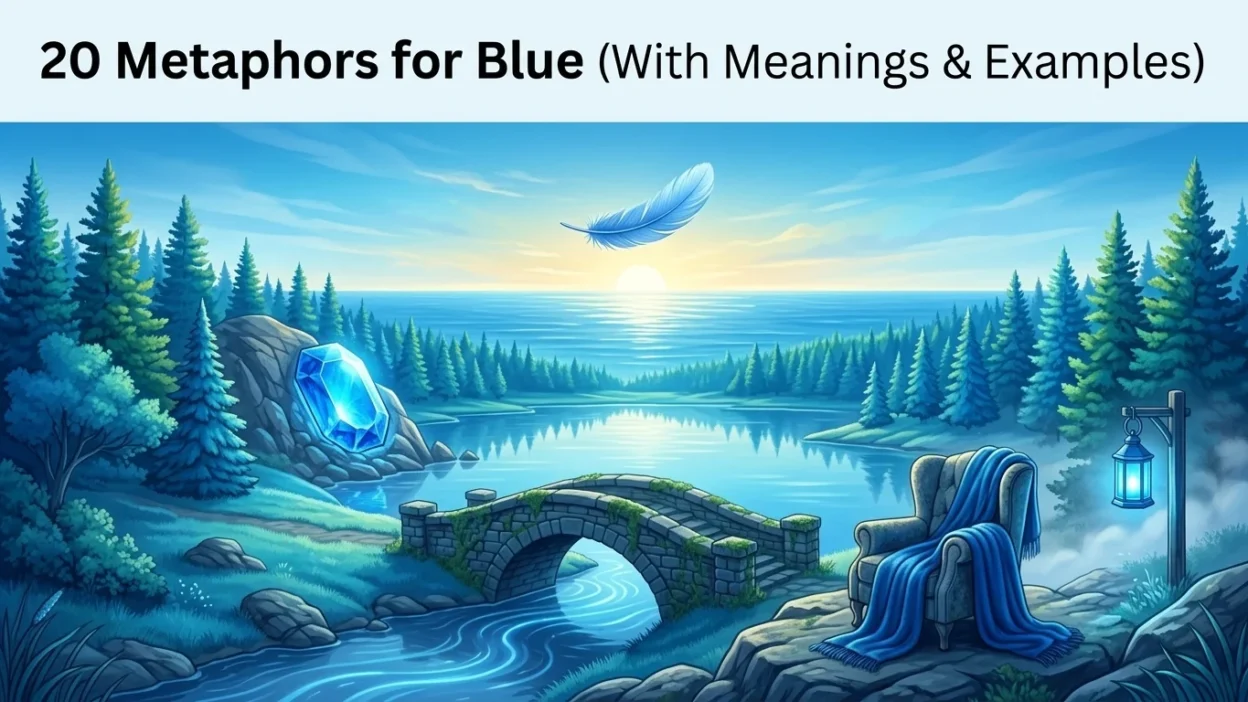
1. Blue is an endless ocean.
Meaning: Blue represents depth and calmness.
Explanation: Oceans are vast, peaceful, and beautifully blue.
Example 1: Her dress was an endless ocean.
Example 2: His eyes held an endless ocean.
2. Blue is a peaceful sky.
Meaning: Blue symbolizes peace and freedom.
Explanation: A clear sky creates a calm feeling.
Example 1: The room was a peaceful sky.
Example 2: Her smile became a peaceful sky.
3. Blue is a quiet whisper.
Meaning: Blue feels gentle and calming.
Explanation: A whisper suggests softness and peace.
Example 1: The walls were a quiet whisper.
Example 2: Blue became a quiet whisper in the painting.
4. Blue is frozen silence.
Meaning: Blue can represent stillness.
Explanation: Ice and silence create a cool image.
Example 1: The lake was frozen silence.
Example 2: His mood became frozen silence.
5. Blue is a sapphire crown.
Meaning: Blue symbolizes beauty and value.
Explanation: Sapphires are brilliant blue gemstones.
Example 1: The necklace was a sapphire crown.
Example 2: The sky wore a sapphire crown.
6. Blue is a gentle breeze.
Meaning: Blue feels fresh and relaxing.
Explanation: A breeze brings comfort and peace.
Example 1: Her voice was a gentle breeze.
Example 2: The painting felt like a gentle breeze.
7. Blue is a dream.
Meaning: Blue represents imagination.
Explanation: Dreams often feel peaceful and limitless.
Example 1: The evening sky was a dream.
Example 2: Blue became a beautiful dream.
8. Blue is a calm river.
Meaning: Blue represents steady peace.
Explanation: Rivers flow quietly and smoothly.
Example 1: His thoughts were a calm river.
Example 2: Blue became a calm river in the artwork.
9. Blue is an open window.
Meaning: Blue suggests freedom and possibility.
Explanation: An open window symbolizes opportunity.
Example 1: The sky was an open window.
Example 2: Hope became an open window.
10. Blue is a sleeping giant.
Meaning: Blue hides quiet strength.
Explanation: Calm things can still be powerful.
Example 1: The ocean was a sleeping giant.
Example 2: Blue carried hidden power.
11. Blue is a soft blanket.
Meaning: Blue brings comfort.
Explanation: Blankets represent warmth and security.
Example 1: Evening wrapped us in a soft blanket.
Example 2: Blue covered the room like comfort.
12. Blue is a crystal mirror.
Meaning: Blue reflects clarity and truth.
Explanation: Mirrors symbolize reflection.
Example 1: The lake became a crystal mirror.
Example 2: Blue reflected every cloud.
13. Blue is a silent song.
Meaning: Blue expresses emotion quietly.
Explanation: Songs can communicate feelings without words.
Example 1: The painting was a silent song.
Example 2: Blue sang without making a sound.
14. Blue is a winter breath.
Meaning: Blue represents coolness.
Explanation: Winter air feels fresh and blue.
Example 1: The morning was a winter breath.
Example 2: Blue filled the cold air.
15. Blue is liquid peace.
Meaning: Blue symbolizes relaxation.
Explanation: Water often represents calm emotions.
Example 1: The sea was liquid peace.
Example 2: Blue flowed across the canvas.
16. Blue is a feather.
Meaning: Blue feels light and gentle.
Explanation: Feathers suggest softness.
Example 1: Her scarf was a feather.
Example 2: Blue floated through the room.
17. Blue is a hidden melody.
Meaning: Blue contains quiet beauty.
Explanation: A melody represents harmony.
Example 1: Blue became a hidden melody.
Example 2: Every shade carried music.
18. Blue is a lantern in the fog.
Meaning: Blue offers hope and guidance.
Explanation: A lantern helps people find their way.
Example 1: Hope became a blue lantern.
Example 2: The light glowed through uncertainty.
19. Blue is a page of the sky.
Meaning: Blue represents endless possibility.
Explanation: The sky feels limitless.
Example 1: Every morning opened a page of the sky.
Example 2: Blue wrote a new story above us.
20. Blue is a quiet heartbeat.
Meaning: Blue symbolizes steady peace.
Explanation: A heartbeat represents life and calm rhythm.
Example 1: Blue became the room’s quiet heartbeat.
Example 2: The peaceful color slowed everyone’s thoughts.
Practical Exercise
- What is a metaphor?
- Complete: Blue is an endless ________.
- Which metaphor represents peace?
- Which metaphor suggests hidden strength?
- What does “Blue is liquid peace” mean?
- Which metaphor shows freedom?
- Which metaphor represents comfort?
- Which metaphor symbolizes hope?
- Write your own metaphor for blue.
- Why do writers use metaphors for colors?
Answers
- A direct comparison without using “like” or “as.”
- Ocean.
- Blue is a peaceful sky.
- Blue is a sleeping giant.
- Blue creates a feeling of calm and relaxation.
- Blue is an open window.
- Blue is a soft blanket.
- Blue is a lantern in the fog.
- Answers will vary.
- Metaphors make descriptions more vivid, emotional, and memorable.
Conclusion
Metaphors for blue help writers describe more than just a color. They can express peace, freedom, mystery, sadness, beauty, or hope through creative comparisons. Instead of simply saying something is blue, you can describe it as an endless ocean, a quiet heartbeat, liquid peace, or a lantern in the fog. These examples of metaphors make writing more engaging and memorable. Try creating your own metaphors by thinking about what the color blue reminds you of. With practice, your creative writing will become richer, more expressive, and easier for readers to imagine.

Gabriel Hudson is a skilled language writer and figurative language enthusiast at Metaphorox.com. He specializes in metaphors, similes, and idioms, creating engaging content that helps readers understand creative expressions and communicate more effectively.