What Are Metaphors for Winter?
Winter is more than a cold season. It can represent silence, rest, change, beauty, or even new beginnings. Metaphors for winter help writers describe these ideas in a creative and memorable way.
A metaphor compares one thing directly to another without using “like” or “as.” For example, you might say, “Winter is a sleeping giant.” Winter is not really a giant. The metaphor simply suggests that nature is resting quietly until spring returns.
In simple terms, metaphors make writing more colorful and engaging. They help readers picture emotions and scenes more clearly. Unlike simile sentences, metaphors create direct comparisons. They are common in stories, poems, speeches, and descriptive writing. Let’s explore 20 examples of metaphors for winter and learn how to use metaphors in writing.
20 Metaphors for Winter
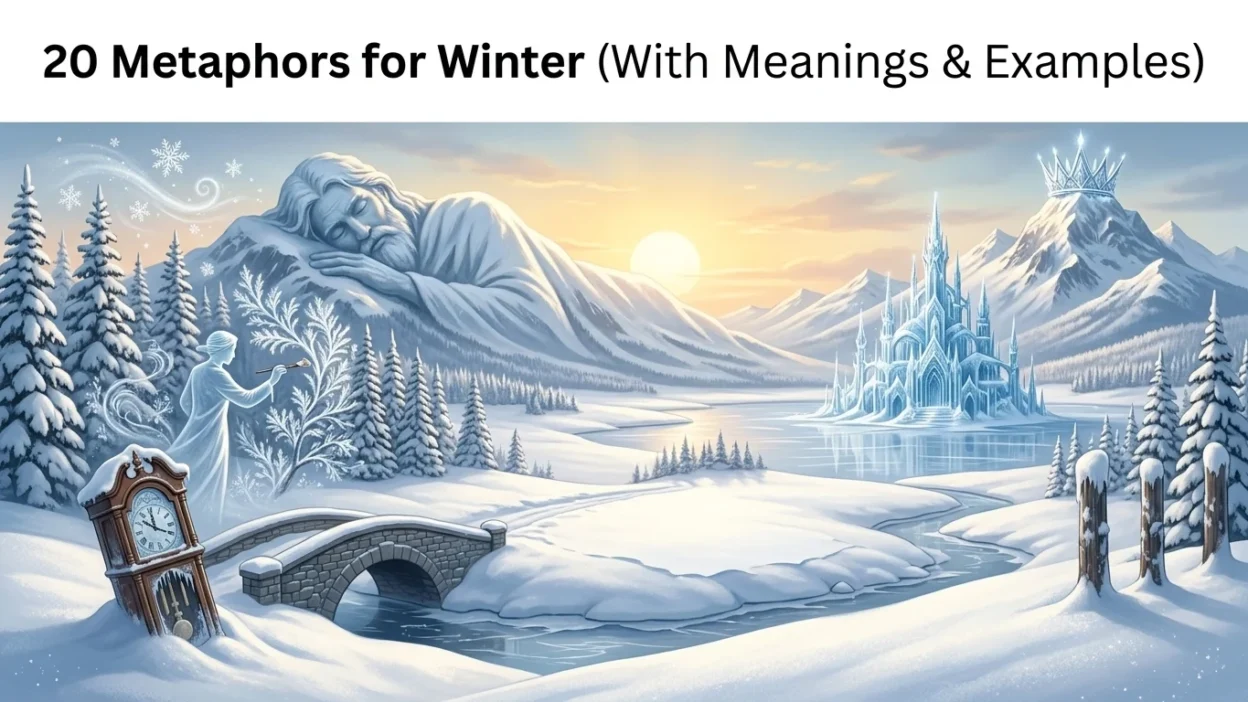
1. Winter is a sleeping giant.
Meaning: Nature is resting.
Explanation: Winter seems quiet before new growth begins.
Example 1: Winter was a sleeping giant across the valley.
Example 2: The giant would awaken in spring.
2. Winter is a white blanket.
Meaning: Snow covers the land.
Explanation: Snow protects and hides the ground.
Example 1: Winter spread a white blanket over the fields.
Example 2: The blanket sparkled in the sun.
3. Winter is a silent painter.
Meaning: Winter changes the landscape beautifully.
Explanation: Frost and snow decorate nature.
Example 1: Winter was a silent painter.
Example 2: Every tree became a masterpiece.
4. Winter is an old storyteller.
Meaning: Winter reminds us of memories and traditions.
Explanation: Long nights encourage stories.
Example 1: Winter became an old storyteller.
Example 2: Every snowfall told a new tale.
5. Winter is a crystal palace.
Meaning: Everything looks bright and icy.
Explanation: Ice sparkles like crystal.
Example 1: The forest became a crystal palace.
Example 2: The palace glittered at sunrise.
6. Winter is a frozen clock.
Meaning: Life seems slower.
Explanation: Cold weather often brings calm and stillness.
Example 1: Winter was a frozen clock.
Example 2: Time seemed to pause.
7. Winter is a quiet library.
Meaning: The season feels peaceful.
Explanation: Snow often creates silence.
Example 1: The woods became a quiet library.
Example 2: Only the wind turned the pages.
8. Winter is nature’s deep breath.
Meaning: Nature rests before spring.
Explanation: Winter is a time of renewal.
Example 1: Winter was nature’s deep breath.
Example 2: Spring followed that peaceful pause.
9. Winter is a silver crown.
Meaning: Snow gives the land a royal look.
Explanation: Snow adds beauty and brightness.
Example 1: Winter placed a silver crown on the mountains.
Example 2: The crown shone in the morning light.
10. Winter is an icy mirror.
Meaning: Frozen surfaces reflect the world.
Explanation: Ice creates beautiful reflections.
Example 1: The lake became an icy mirror.
Example 2: The mirror reflected the blue sky.
11. Winter is a sleeping kingdom.
Meaning: Everything is resting.
Explanation: Plants and animals slow down.
Example 1: The forest became a sleeping kingdom.
Example 2: Spring would soon wake it.
12. Winter is a whisper.
Meaning: The season is calm and gentle.
Explanation: Snow often falls quietly.
Example 1: Winter arrived as a whisper.
Example 2: The whisper covered the town.
13. Winter is a pearl.
Meaning: Winter is pure and beautiful.
Explanation: Snow shines with soft brightness.
Example 1: Winter was a shining pearl.
Example 2: The pearl sparkled under the moon.
14. Winter is a frozen river of time.
Meaning: Life slows during winter.
Explanation: The season encourages reflection.
Example 1: Winter became a frozen river of time.
Example 2: Everything moved more slowly.
15. Winter is a glass sculpture.
Meaning: Ice creates delicate beauty.
Explanation: Frozen landscapes look artistic.
Example 1: The trees became glass sculptures.
Example 2: Sunlight made them sparkle.
16. Winter is a peaceful dream.
Meaning: Winter feels calm and magical.
Explanation: Snow creates a dreamlike scene.
Example 1: The village looked like a peaceful dream.
Example 2: Morning light completed the dream.
17. Winter is a guardian.
Meaning: Winter protects nature before spring.
Explanation: Rest helps plants prepare for new growth.
Example 1: Winter stood as a quiet guardian.
Example 2: The guardian watched over the forest.
18. Winter is a silver curtain.
Meaning: Snow changes the landscape.
Explanation: Snow hides what lies beneath.
Example 1: Winter lowered a silver curtain.
Example 2: The curtain covered every hill.
19. Winter is a sleeping song.
Meaning: Nature’s music is quiet for a while.
Explanation: Birds and insects become less active.
Example 1: Winter was a sleeping song.
Example 2: Spring would sing the next verse.
20. Winter is a fresh page.
Meaning: Winter represents a new beginning.
Explanation: A clean snowy landscape symbolizes a fresh start.
Example 1: Winter became a fresh page.
Example 2: New hopes were written upon it.
Practical Exercise
- What is a metaphor?
- Complete: Winter is a sleeping ________.
- Which metaphor represents peace and silence?
- Which metaphor shows beauty through snow?
- What does “winter is a white blanket” mean?
- Which metaphor suggests a new beginning?
- Which metaphor represents slow time?
- What does “winter is nature’s deep breath” suggest?
- Write your own metaphor for winter.
- Why do writers use metaphors?
Answers
- A direct comparison without using “like” or “as.”
- Giant.
- Winter is a whisper or a quiet library.
- Winter is a crystal palace or a silver crown.
- Snow covers the land.
- Winter is a fresh page.
- Winter is a frozen clock.
- Nature is resting before spring.
- Answers will vary.
- They make writing more vivid, imaginative, and memorable.
Conclusion
Metaphors for winter help writers describe the season in creative and meaningful ways. Instead of simply calling winter cold, you can describe it as a sleeping giant, a white blanket, a crystal palace, or a fresh page. These examples of metaphors make stories, poems, and essays more expressive and memorable. Try creating your own metaphors by thinking about winter’s colors, sounds, and feelings. With practice, you’ll write vivid descriptions that capture the beauty and quiet power of the season.