Introduction
The color green can represent many different ideas. Depending on the situation, it may symbolize nature, growth, hope, health, youth, peace, envy, or even new beginnings. Because green has so many meanings, writers often use metaphors for green to create vivid descriptions and deeper emotions. Instead of simply saying something is green or connected to the color, you can compare it to an object or idea that helps readers imagine its meaning.
For example, instead of writing “The forest was full of life,” you could say, “The forest was Earth’s heartbeat.” Likewise, instead of saying “She was inexperienced,” you might write, “She was a fresh spring leaf.” These metaphors make your writing more colorful and memorable while helping readers connect with your message.
In simple terms, metaphors transform ordinary descriptions into powerful images. Whether you’re writing essays, poems, stories, or speeches, learning how to use metaphors in writing will improve your creativity. So, let’s explore 20 metaphors for green, understand their meanings, and practice using them with confidence.
What Is a Metaphor?
A metaphor is a figure of speech that directly compares one thing to another without using like or as.
Example
Hope is a green shoot.
This doesn’t mean hope is literally a plant. Instead, it suggests that hope grows and brings new life.
The meaning of metaphors is to explain ideas through vivid and imaginative comparisons.
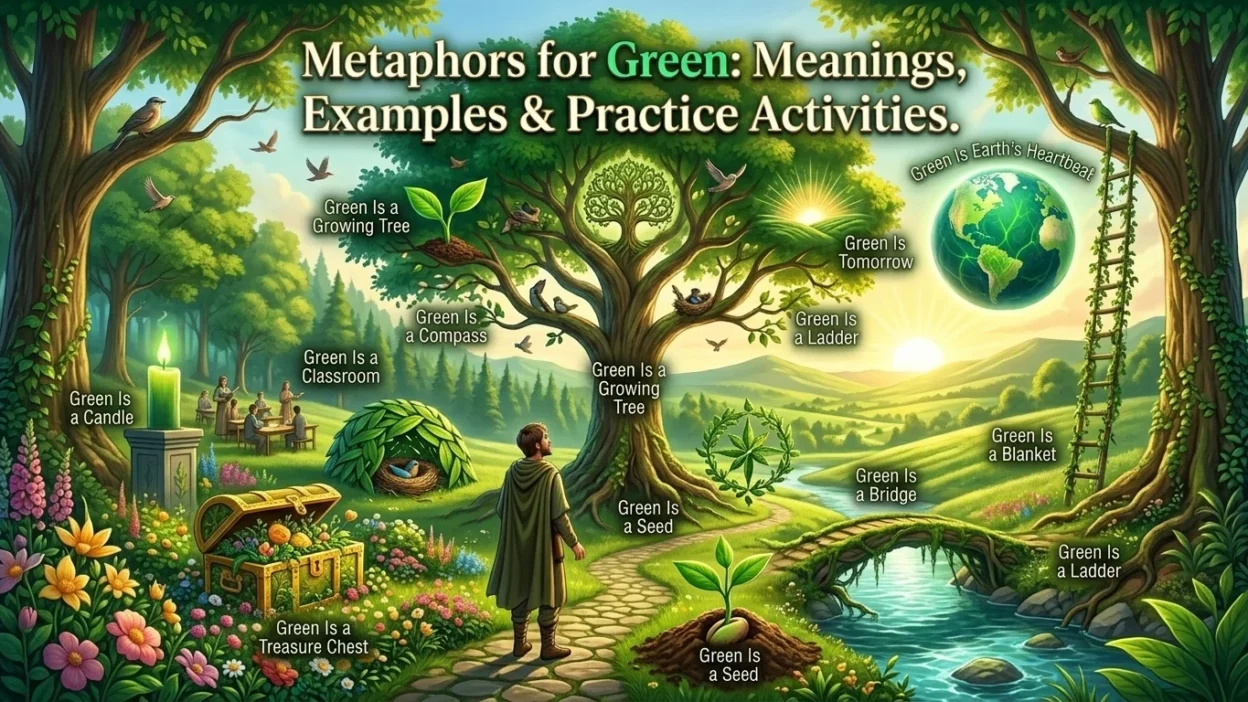
20 Metaphors for Green
1. Green Is a New Beginning
Meaning: Green represents fresh starts.
Explanation: Green is often linked with spring and renewal.
Example Sentences:
- Her new job was a green beginning.
- Every sunrise became a green beginning.
2. Green Is a Growing Tree
Meaning: Green symbolizes growth.
Explanation: Trees grow stronger over time.
Example Sentences:
- His knowledge became a growing tree.
- Success started as a growing tree.
3. Green Is Earth’s Heartbeat
Meaning: Green represents life and nature.
Explanation: Nature keeps the planet alive.
Example Sentences:
- The rainforest was Earth’s heartbeat.
- Every forest echoed Earth’s heartbeat.
4. Green Is a Fresh Leaf
Meaning: Green symbolizes youth and new experiences.
Explanation: Fresh leaves are young and full of life.
Example Sentences:
- She was a fresh leaf in the company.
- Every beginner is a fresh leaf.
5. Green Is a Garden
Meaning: Green represents growth and care.
Explanation: Gardens flourish with attention.
Example Sentences:
- Kindness became a beautiful garden.
- Good habits grow like a garden.
6. Green Is a Seed
Meaning: Green symbolizes potential.
Explanation: Seeds hold future possibilities.
Example Sentences:
- His dream became a seed.
- Every idea starts as a seed.
7. Green Is a River
Meaning: Green represents continuous life.
Explanation: Rivers support living things.
Example Sentences:
- Hope became a green river.
- Life flowed like a river.
8. Green Is a Blanket
Meaning: Green provides comfort.
Explanation: Grass and forests cover the land.
Example Sentences:
- The valley wore a green blanket.
- Nature spread its green blanket.
9. Green Is a Breath
Meaning: Green represents fresh air.
Explanation: Plants help create clean air.
Example Sentences:
- The forest became Earth’s breath.
- Every tree offered a fresh breath.
10. Green Is a Compass
Meaning: Green points toward sustainability.
Explanation: A compass guides direction.
Example Sentences:
- Conservation became our green compass.
- Nature remained the compass for the future.
11. Green Is a Crown
Meaning: Green symbolizes beauty and pride.
Explanation: Tree tops resemble crowns.
Example Sentences:
- The forest wore a green crown.
- Spring placed a green crown on the hills.
12. Green Is a Ladder
Meaning: Green represents progress.
Explanation: Growth happens step by step.
Example Sentences:
- Learning became a green ladder.
- Every lesson climbed higher.
13. Green Is a Promise
Meaning: Green symbolizes hope.
Explanation: New plants promise future harvests.
Example Sentences:
- Every sprout became a promise.
- Green fields promised abundance.
14. Green Is a Shield
Meaning: Nature protects life.
Explanation: Forests protect ecosystems.
Example Sentences:
- Trees became Earth’s shield.
- Forests formed a green shield.
15. Green Is a Symphony
Meaning: Nature works in harmony.
Explanation: Plants, animals, and weather exist together.
Example Sentences:
- The jungle became a green symphony.
- Nature played a peaceful symphony.
16. Green Is a Classroom
Meaning: Nature teaches valuable lessons.
Explanation: The natural world inspires learning.
Example Sentences:
- The forest became our classroom.
- Every tree taught patience.
17. Green Is a Candle
Meaning: Green gives hope.
Explanation: Even small plants brighten the world.
Example Sentences:
- A single tree became a green candle.
- Hope glowed through nature.
18. Green Is a Bridge
Meaning: Green connects people with nature.
Explanation: Nature brings communities together.
Example Sentences:
- Parks became green bridges.
- Nature connected generations.
19. Green Is a Treasure Chest
Meaning: Nature is valuable.
Explanation: Forests contain priceless resources.
Example Sentences:
- The rainforest became a treasure chest.
- Nature remains our greatest treasure.
20. Green Is Tomorrow
Meaning: Green symbolizes the future.
Explanation: Healthy ecosystems support future generations.
Example Sentences:
- Every tree became tomorrow.
- Protecting nature protects tomorrow.
Practical Exercise
Questions
- Complete the metaphor: Green is a growing ______.
- Which metaphor represents hope?
- What does Green Is Earth’s Heartbeat mean?
- Complete the metaphor: Green is a fresh ______.
- Which metaphor symbolizes protection?
- What does Green Is a Seed suggest?
- Complete the metaphor: Green is a treasure ______.
- Which metaphor represents learning?
- What does Green Is Tomorrow symbolize?
- Which metaphor describes harmony in nature?
Answers and Explanations
1. Tree – Green symbolizes growth.
2. A Promise – It represents hope for the future.
3. Nature supports all life – Just as a heartbeat sustains the body.
4. Leaf – Fresh leaves represent youth and new beginnings.
5. A Shield – Nature protects life and ecosystems.
6. Green represents future potential – Like a seed growing into a plant.
7. Chest – Nature is valuable like hidden treasure.
8. A Classroom – Nature teaches important lessons.
9. The future of life – Green represents sustainability and hope.
10. A Symphony – Nature works together in harmony.
How to Create Your Own Metaphors
Creating your own metaphors is easier than it seems.
1: First, decide what green represents in your writing, such as growth, hope, or nature.
2: Next, choose an object that shares the same quality.
3: Then, compare them directly without using like or as.
Examples
- Green is tomorrow’s promise.
- Nature is a living library.
- Every leaf is a tiny teacher.
As you continue practicing, you’ll naturally create stronger creative writing metaphors. Moreover, your essays, poems, and stories will become more engaging and memorable.
Conclusion
Metaphors for green help writers express ideas about growth, nature, hope, youth, and new beginnings through vivid imagery. Instead of repeating simple descriptions, you can use imaginative comparisons that make your writing more meaningful and enjoyable to read. Throughout this guide, you’ve explored examples of metaphors, learned the meaning of metaphors, and discovered how to use metaphors in writing through practical examples and exercises.
Now it’s your turn. Think about what the color green means to you and create your own original metaphor. The more you practice, the easier it becomes to write creative, expressive, and memorable content.

Gabriel Hudson is a skilled language writer and figurative language enthusiast at Metaphorox.com. He specializes in metaphors, similes, and idioms, creating engaging content that helps readers understand creative expressions and communicate more effectively.