Introduction
Fall, also called autumn, is one of the most colorful and meaningful seasons of the year. As the leaves change color and the air turns cool, nature reminds us that change is a normal part of life. Because of this, writers often use metaphors for fall to describe beauty, change, growth, reflection, and new beginnings. Instead of simply saying that autumn has arrived, a metaphor creates a vivid picture that readers can easily imagine and remember.
For example, instead of writing, “The trees lost their leaves,” you could write, “The forest wore a golden blanket.” Immediately, readers picture a peaceful autumn landscape. Likewise, instead of saying, “Autumn brings change,” you might write, “Fall is nature’s farewell song.” These creative comparisons make writing more expressive and memorable.
In simple terms, metaphors help readers experience fall through powerful images rather than plain descriptions. Whether you’re writing an essay, poem, speech, or story, learning how to use metaphors in writing will improve your creativity. So, let’s explore 20 metaphors for fall, discover their meanings, enjoy practical examples of metaphors, and practice creating your own.
What Is a Metaphor?
A metaphor is a figure of speech that directly compares one thing to another without using like or as.
Example
Fall is a golden blanket.
This doesn’t mean autumn is literally a blanket. Instead, it means colorful leaves cover the ground beautifully.
The meaning of metaphors is to create vivid comparisons that make writing more interesting and meaningful.
20 Metaphors for Fall
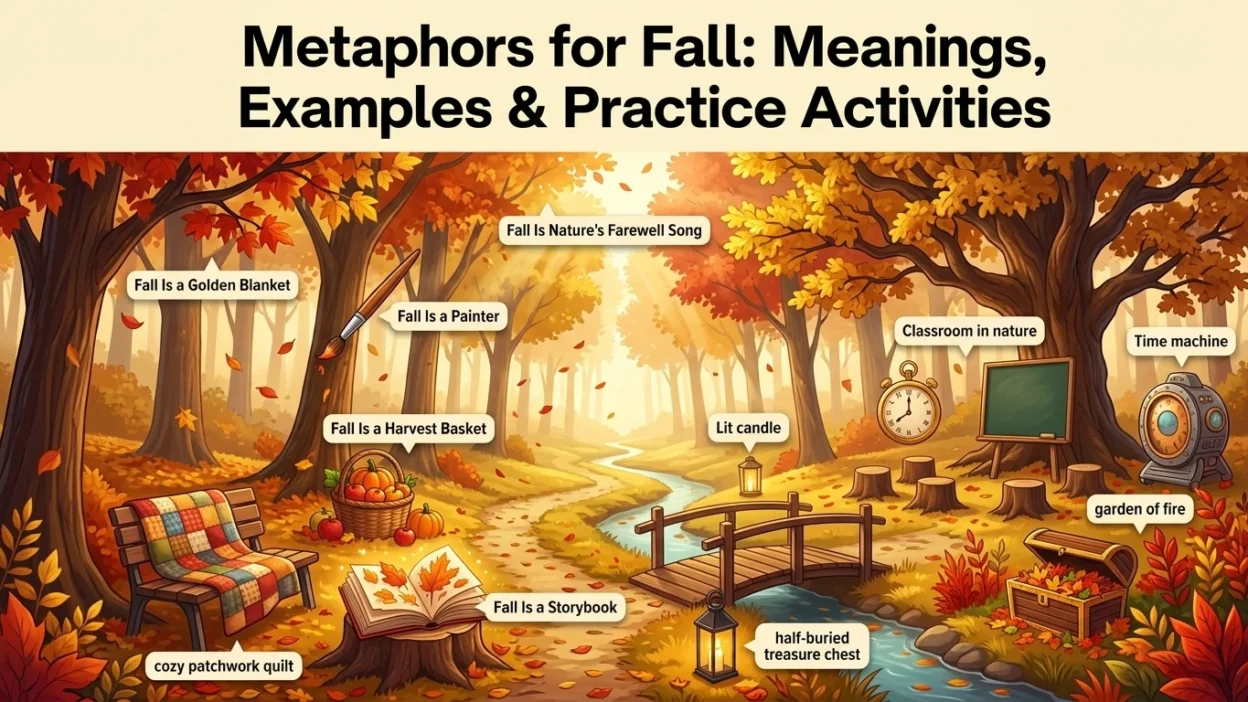
1. Fall Is a Golden Blanket
Meaning: Autumn covers the ground with colorful leaves.
Explanation: Fallen leaves create a warm golden layer.
Example Sentences:
- Fall spread a golden blanket across the park.
- The children played on the golden blanket.
2. Fall Is Nature’s Farewell Song
Meaning: Autumn marks the end of one season.
Explanation: Nature prepares for winter.
Example Sentences:
- Fall is nature’s farewell song.
- Every colorful leaf joined the melody.
3. Fall Is a Painter
Meaning: Autumn colors the world.
Explanation: Trees become bright red, orange, and yellow.
Example Sentences:
- Fall painted the forest.
- Every tree displayed the painter’s work.
4. Fall Is a Cozy Blanket
Meaning: Autumn brings comfort.
Explanation: Cool weather encourages warmth.
Example Sentences:
- Fall became a cozy blanket.
- The cool breeze invited everyone inside.
5. Fall Is a Harvest Basket
Meaning: Autumn is a season of abundance.
Explanation: Crops are ready to gather.
Example Sentences:
- Fall is a harvest basket.
- Farmers celebrated the full basket.
6. Fall Is a Storybook
Meaning: Every autumn scene tells a story.
Explanation: Changing colors create beautiful chapters.
Example Sentences:
- Fall opened another storybook.
- Every leaf became a page.
7. Fall Is a Sunset
Meaning: Autumn symbolizes beautiful endings.
Explanation: Sunsets mark the close of the day.
Example Sentences:
- Fall is a peaceful sunset.
- The season ended with beautiful colors.
8. Fall Is a Symphony
Meaning: Nature works together beautifully.
Explanation: Wind, leaves, and birds create harmony.
Example Sentences:
- Fall became a symphony.
- Every breeze added another note.
9. Fall Is a Treasure Chest
Meaning: Autumn is full of beauty.
Explanation: The season offers colorful gifts.
Example Sentences:
- Fall opened a treasure chest.
- Every leaf became another jewel.
10. Fall Is a Quilt
Meaning: Autumn wraps nature in warm colors.
Explanation: Different leaves create colorful patterns.
Example Sentences:
- Fall spread a colorful quilt.
- The forest rested beneath the quilt.
11. Fall Is a Classroom
Meaning: Autumn teaches lessons about change.
Explanation: Nature shows that change is natural.
Example Sentences:
- Fall is life’s classroom.
- Every tree taught patience.
12. Fall Is a Bridge
Meaning: Autumn connects summer and winter.
Explanation: It marks an important transition.
Example Sentences:
- Fall became a bridge.
- The bridge led gently into winter.
13. Fall Is a Whisper
Meaning: Autumn arrives quietly.
Explanation: The season changes gently.
Example Sentences:
- Fall arrived as a whisper.
- The wind carried its message.
14. Fall Is a Candle
Meaning: Autumn brings warmth during cooler days.
Explanation: Candles create comfort and light.
Example Sentences:
- Fall is a glowing candle.
- Families gathered around its warmth.
15. Fall Is a Time Machine
Meaning: Autumn brings memories.
Explanation: Familiar sights remind people of the past.
Example Sentences:
- Fall became a time machine.
- Every breeze carried childhood memories.
16. Fall Is a Garden of Fire
Meaning: Autumn colors glow brightly.
Explanation: Red and orange leaves resemble flames.
Example Sentences:
- The forest became a garden of fire.
- Every tree burned with color.
17. Fall Is a Gentle Goodbye
Meaning: Autumn slowly ends the growing season.
Explanation: Nature prepares for winter.
Example Sentences:
- Fall offered a gentle goodbye.
- The trees waved farewell.
18. Fall Is a Painting
Meaning: Autumn creates beautiful scenery.
Explanation: Every landscape becomes artistic.
Example Sentences:
- Fall became a masterpiece.
- Every hill completed the painting.
19. Fall Is a Fresh Chapter
Meaning: Autumn begins a new season.
Explanation: Every season starts a new story.
Example Sentences:
- Fall opened a fresh chapter.
- New adventures filled every page.
20. Fall Is a Golden Clock
Meaning: Autumn reminds us that time moves forward.
Explanation: The changing season marks the passage of time.
Example Sentences:
- Fall became a golden clock.
- Every falling leaf marked another moment.
Practical Exercise
Questions
- Complete the metaphor: Fall is a golden ______.
- Which metaphor represents colorful trees?
- What does fall is a bridge mean?
- Complete the metaphor: Fall is nature’s farewell ______.
- Which metaphor symbolizes learning?
- What does fall is a treasure chest suggest?
- Complete the metaphor: Fall is a garden of ______.
- Which metaphor represents memories?
- What does fall is a quilt symbolize?
- Which metaphor represents the passing of time?
Answers and Explanations
1. Blanket – Leaves cover the ground.
2. A Painter – Autumn colors the landscape.
3. It connects seasons – Autumn links summer and winter.
4. Song – Nature prepares for winter.
5. A Classroom – Autumn teaches lessons about change.
6. Fall is full of beauty – Nature offers colorful gifts.
7. Fire – Bright leaves resemble glowing flames.
8. A Time Machine – Autumn brings back memories.
9. Warm colorful comfort – Leaves create a patchwork of colors.
10. A Golden Clock – Fall reminds us that time keeps moving.
How to Create Your Own Metaphors
Creating metaphors is simple.
1: First, think about what makes fall special.
2: Next, choose an object that shares similar qualities.
3: Then, write that fall is the object without using like or as.
Examples
- Fall is a box of crayons.
- Fall is a peaceful poem.
- Fall is a warm fireplace.
The more you practice, the easier it becomes to use creative writing metaphors naturally. Consequently, your writing will become richer, more descriptive, and more memorable.
Conclusion
Metaphors make fall come alive by turning ordinary seasonal changes into vivid images. Instead of simply describing colorful leaves or cool weather, they help readers feel the beauty, warmth, and meaning of autumn. Throughout this guide, you’ve explored examples of metaphors, learned the meaning of metaphors, and practiced using them in your own writing.
Now it’s your turn. Look outside during the fall season and think about what it reminds you of. Then create your own original metaphor. With regular practice, you’ll master how to use metaphors in writing and create essays, stories, poems, and speeches that readers will remember.