What Are Metaphors for Laughing?
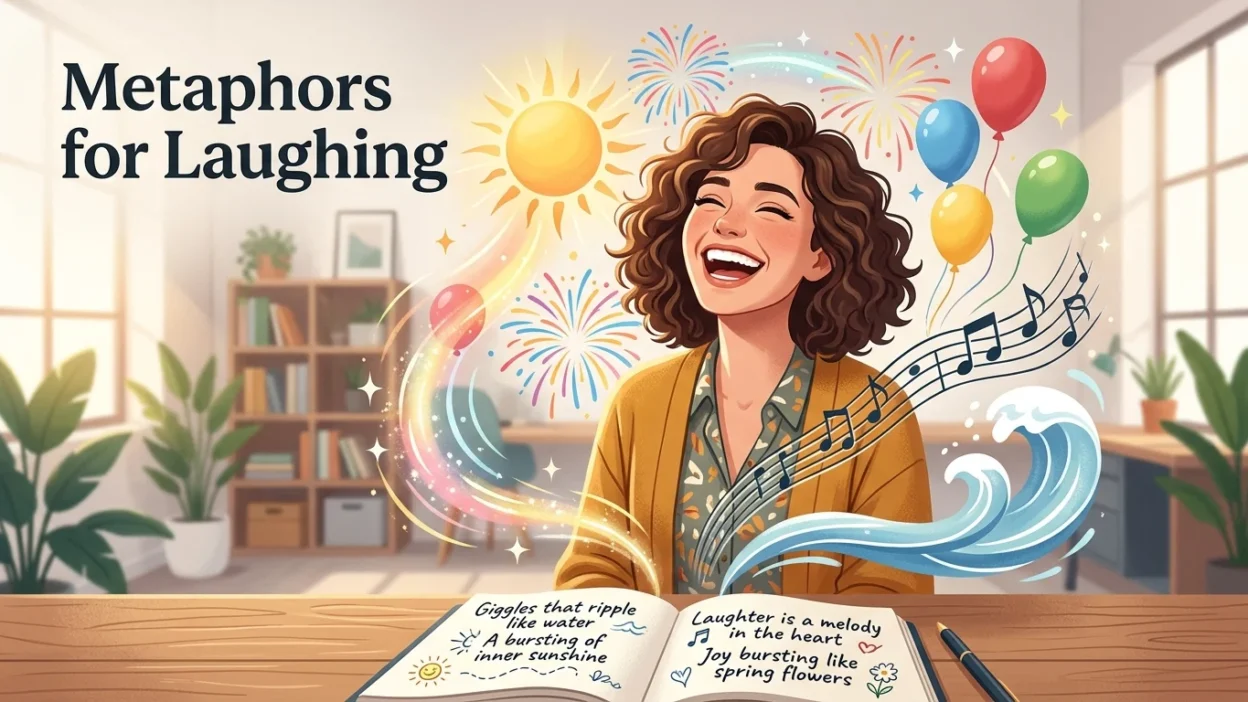
Have you ever laughed so much that ordinary words could not describe the moment? That is where metaphors for laughing can make your writing more powerful. A metaphor compares one thing to another without using “like” or “as.” Instead of simply saying, “She laughed loudly,” you might say, “Her laughter was a burst of sunshine.” This creates a picture in the reader’s mind.
In simple terms, metaphors turn laughter into something we can see, hear, or feel. They can make a character seem joyful, playful, excited, nervous, or even mischievous. For example, “His laughter was fireworks” suggests a sudden and energetic burst of happiness.
When you use creative writing metaphors, you give ordinary moments more personality. You also help readers connect with emotions instead of simply reading about them. So, let’s explore 20 examples of metaphors for laughing and learn how to use them naturally in your own writing.
20 Metaphors for Laughing
1. Laughter Is Sunshine
Meaning: Happiness, warmth, and joy.
Explanation: This metaphor compares laughter to sunshine because both can brighten a moment and make people feel good.
Example 1: Her laughter was sunshine in the quiet room.
Example 2: His warm laugh brought sunshine to everyone’s morning.
2. Laughter Is Fireworks
Meaning: A sudden, exciting burst of laughter.
Explanation: Fireworks explode with energy and color, so this metaphor works well for loud or unexpected laughter.
Example 1: His laughter was fireworks across the dinner table.
Example 2: Her sudden laugh became fireworks in the silent classroom.
3. Laughter Is Music
Meaning: Pleasant and joyful laughter.
Explanation: This metaphor compares laughter to music because both can create a pleasant sound and lift the mood.
Example 1: Her laughter was music to her friends.
Example 2: The children’s laughter became music throughout the house.
4. Laughter Is a Spark
Meaning: A small moment of joy that spreads.
Explanation: A spark can start something larger. In the same way, one person’s laughter can encourage others to laugh.
Example 1: His laugh was a spark that started a wave of laughter.
Example 2: One tiny giggle became a spark of joy around the table.
5. Laughter Is a Wave
Meaning: Laughter that spreads from person to person.
Explanation: A wave moves outward and affects everything in its path. This metaphor shows how laughter can quickly spread through a group.
Example 1: Her laughter was a wave that swept through the room.
Example 2: A wave of laughter rolled through the audience.
6. Laughter Is a River
Meaning: Continuous and flowing laughter.
Explanation: A river keeps moving, so this metaphor describes laughter that flows freely and seems difficult to stop.
Example 1: Their laughter was a river flowing through the afternoon.
Example 2: His laughter became a river of joy during the celebration.
7. Laughter Is a Breeze
Meaning: Light, gentle, and pleasant laughter.
Explanation: A breeze feels soft and refreshing. This metaphor suits quiet giggles or gentle laughter.
Example 1: Her laughter was a soft breeze in the tense room.
Example 2: A gentle breeze of laughter passed between the friends.
8. Laughter Is a Bell
Meaning: Clear, bright, and noticeable laughter.
Explanation: Bells produce a clear sound that people can easily hear. This metaphor works well for a distinctive laugh.
Example 1: His laughter was a bell ringing across the garden.
Example 2: Her bright laugh sounded like a bell of happiness.
9. Laughter Is a Light
Meaning: Laughter that brings happiness or comfort.
Explanation: Light helps brighten dark places. Similarly, laughter can brighten a difficult or quiet moment.
Example 1: Her laughter was a light in a difficult day.
Example 2: His smile and laughter became a light for everyone around him.
10. Laughter Is a Storm
Meaning: Powerful, uncontrollable laughter.
Explanation: A storm can arrive with great force. This metaphor describes laughter that comes suddenly and strongly.
Example 1: His laughter was a storm that shook the quiet room.
Example 2: A storm of laughter erupted after the joke.
11. Laughter Is a Thunderclap
Meaning: Very loud and sudden laughter.
Explanation: A thunderclap creates a powerful sound without warning. This metaphor emphasizes the strength of someone’s laugh.
Example 1: Her laughter was a thunderclap across the hall.
Example 2: His sudden laugh hit the room like a thunderclap.
12. Laughter Is a Fountain
Meaning: Laughter that keeps flowing freely.
Explanation: A fountain continuously sends water upward and outward. This metaphor creates the image of laughter flowing without restraint.
Example 1: Her laughter was a fountain of pure joy.
Example 2: The child’s laughter became a fountain that filled the garden.
13. Laughter Is a Balloon
Meaning: Light, playful, and uplifting laughter.
Explanation: Balloons rise into the air, so this metaphor suggests laughter that feels carefree and joyful.
Example 1: His laughter was a balloon floating above the serious conversation.
Example 2: Her giggles became balloons of happiness in the room.
14. Laughter Is a Drumbeat
Meaning: Strong, rhythmic, energetic laughter.
Explanation: A drumbeat creates a steady rhythm. This metaphor works well when laughter comes in repeated bursts.
Example 1: His laughter was a drumbeat throughout the evening.
Example 2: Her joyful laugh became the drumbeat of the celebration.
15. Laughter Is a Garden
Meaning: A source of happiness and positive feelings.
Explanation: A garden can grow beautiful things. This metaphor suggests that laughter creates an environment where joy can grow.
Example 1: Their laughter was a garden of happiness.
Example 2: The children’s laughter turned the backyard into a garden of joy.
16. Laughter Is a Rainbow
Meaning: Colorful, hopeful, and joyful emotion.
Explanation: A rainbow often represents beauty and hope. This metaphor gives laughter a bright and uplifting quality.
Example 1: Her laughter was a rainbow after a difficult morning.
Example 2: His laugh brought a rainbow of joy to the conversation.
17. Laughter Is a Bell of Freedom
Meaning: Laughter that expresses comfort and freedom.
Explanation: This metaphor presents laughter as a sound that shows someone has relaxed and feels free to enjoy the moment.
Example 1: Her laughter was a bell of freedom after the stressful week.
Example 2: His carefree laugh rang like a bell of freedom.
18. Laughter Is a Wave of Joy
Meaning: A powerful feeling of happiness that spreads.
Explanation: This metaphor combines movement and emotion. It works especially well when one person’s laughter affects everyone nearby.
Example 1: A wave of joy filled the room when she started laughing.
Example 2: His laughter sent a wave of joy through the group.
19. Laughter Is a Key
Meaning: Laughter that helps open people up.
Explanation: A key opens a locked door. Similarly, laughter can help people relax, connect, and feel comfortable.
Example 1: Her laughter was a key that opened the quiet conversation.
Example 2: His friendly laugh became the key to everyone’s confidence.
20. Laughter Is a Celebration
Meaning: Laughter represents happiness and enjoyment.
Explanation: A celebration brings people together through happiness. This metaphor shows laughter as an expression of shared joy.
Example 1: Their laughter was a celebration of friendship.
Example 2: Every laugh around the table became a small celebration.
How to Use Metaphors for Laughing in Writing
Using metaphors well does not mean adding complicated words to every sentence. Instead, choose an image that matches the emotion you want to show.
For example, “Her laughter was sunshine” creates a warm and gentle feeling. However, “Her laughter was thunder” creates a much stronger image.
Here are a few simple tips:
Match the Metaphor to the Emotion
Think about what the character feels. If the laughter sounds soft, choose an image such as a breeze or music. If it sounds powerful, choose a storm or thunderclap.
Think About the Sound
Ask yourself what the laughter sounds like. Is it loud, soft, quick, deep, playful, or sudden? Your answer can help you find the right metaphor.
Think About the Effect
Next, consider what the laughter does to other people. Does it make everyone happy? Do it break an awkward silence? Does it fill the room?
For example:
Her laughter was a key that unlocked the room.
This metaphor shows that her laughter helped everyone relax.
Keep It Natural
Good metaphors should support your writing rather than distract from it. You do not need a metaphor in every sentence. Use one when it adds a clear image or emotion.
Metaphors vs. Similes for Laughing
Metaphors and similes both make writing more vivid, but they work differently.
A metaphor makes a direct comparison:
“His laughter was thunder.”
A simile uses “like” or “as”:
“His laughter was like thunder.”
Both sentences create a strong image, but the metaphor sounds more direct and dramatic.
So, when you study examples of metaphors, remember this simple rule: metaphors say something is something else, while similes say something is like something else.
Practical Exercise: Metaphors for Laughing
Try these questions before checking the answers.
- What is a metaphor?
- Complete the metaphor:
“Her laughter was ________.” - Which metaphor suggests a sudden and powerful laugh: sunshine, breeze, or fireworks?
- Which metaphor best describes gentle laughter: a storm, a breeze, or a thunderclap?
- What does “laughter is sunshine” suggest?
- Which metaphor describes laughter that spreads through a group?
- What does “laughter is a key” mean?
- Complete the sentence with your own metaphor:
“His laughter was ________.” - Is this a metaphor or a simile?
“Her laughter was like music.” - Create one original metaphor for a character who laughs loudly.
Answers and Explanations
1. What is a metaphor?
Answer: A metaphor directly compares two different things without using “like” or “as.”
Explanation: For example, “Her laughter was sunshine” directly connects laughter with sunshine.
2. Complete the metaphor.
Answer: Answers can vary. One example is: “Her laughter was music.”
Explanation: The metaphor compares pleasant laughter to music.
3. Which metaphor suggests a sudden and powerful laugh?
Answer: Fireworks.
Explanation: Fireworks burst into the sky with energy and excitement, making them a strong image for sudden laughter.
4. Which metaphor best describes gentle laughter?
Answer: A breeze.
Explanation: A breeze feels light and soft, making it a good image for quiet laughter.
5. What does “laughter is sunshine” suggest?
Answer: It suggests warmth, happiness, and joy.
Explanation: Sunshine often brightens a place, just as joyful laughter can brighten a moment.
6. Which metaphor describes laughter that spreads through a group?
Answer: A wave.
Explanation: A wave moves outward, so it works well for laughter that passes from one person to another.
7. What does “laughter is a key” mean?
Answer: It means laughter can help people relax and connect.
Explanation: A key opens something that was closed. In the same way, laughter can help open conversations and friendships.
8. Complete the sentence with your own metaphor.
Answer: Answers will vary. For example: “His laughter was a river.”
Explanation: The metaphor suggests that his laughter flowed continuously.
9. Is “Her laughter was like music” a metaphor or simile?
Answer: Simile.
Explanation: The sentence uses the word “like,” so it is a simile rather than a direct metaphor.
10. Create an original metaphor for loud laughter.
Answer: Answers will vary. For example: “His laughter was a thunderclap.”
Explanation: A thunderclap produces a sudden, powerful sound, so it creates a vivid image of loud laughter.
Why Metaphors Make Writing Better
Metaphors give ordinary descriptions more life. Instead of simply telling readers that someone laughed, you can show the feeling behind the laugh.
For example:
Plain:
She laughed loudly.
With a metaphor:
Her laughter was fireworks in the quiet room.
The second sentence gives readers a stronger picture. They can imagine the sudden burst of sound and energy.
Moreover, metaphors can reveal character. A gentle character might have “laughter like a warm breeze,” while an energetic character might have “laughter that was a storm.”
In creative writing, this simple change can make your characters feel more memorable.
Conclusion
Metaphors for laughing help writers turn simple laughter into vivid images. Instead of using the same words again and again, you can describe laughter as sunshine, music, fireworks, a wave, a breeze, or a storm. Each metaphor creates a different feeling and helps readers imagine the scene.
In simple terms, the best metaphor matches the emotion, sound, and effect of the laughter you want to describe. So, when you write your next story, poem, or essay, try creating your own comparison. Think about what the laughter sounds like, what it feels like, and how it affects the people around it. Then choose an image that captures that feeling. With practice, you can use creative writing metaphors to make your writing clearer, more colorful, and much more memorable.